
American Fork Genealogy Sources
American Fork Genealogy benefits from a city that was settled in 1850 and incorporated in 1853, which gives it one of the longer municipal paper trails in Utah County. The city recorder preserves historical city records, and the city cemetery reaches back to burials from the 1850s, so local research can often stay close to home for the first pass. That matters when you are trying to separate a family that lived in the area from one that only passed through. American Fork also sits inside a broader county and state record environment, so the strongest research usually comes from moving between the city office, the cemetery, county records, and statewide tools rather than depending on a single source.
American Fork Genealogy at the City Recorder
The American Fork City Recorder is the first municipal stop when a family event, city decision, or neighborhood question belongs inside the city's incorporated history. The office preserves historical city records, which is valuable because American Fork has an older civic span than many newer Utah cities. The recorder's office is at 31 S Main Street, American Fork, UT 84003, and the phone number is 801-763-3000. For American Fork Genealogy, that office is most useful when you need an ordinance, resolution, or another city document that helps place a household in a specific time and place.
Lead-in source: American Fork City Recorder.
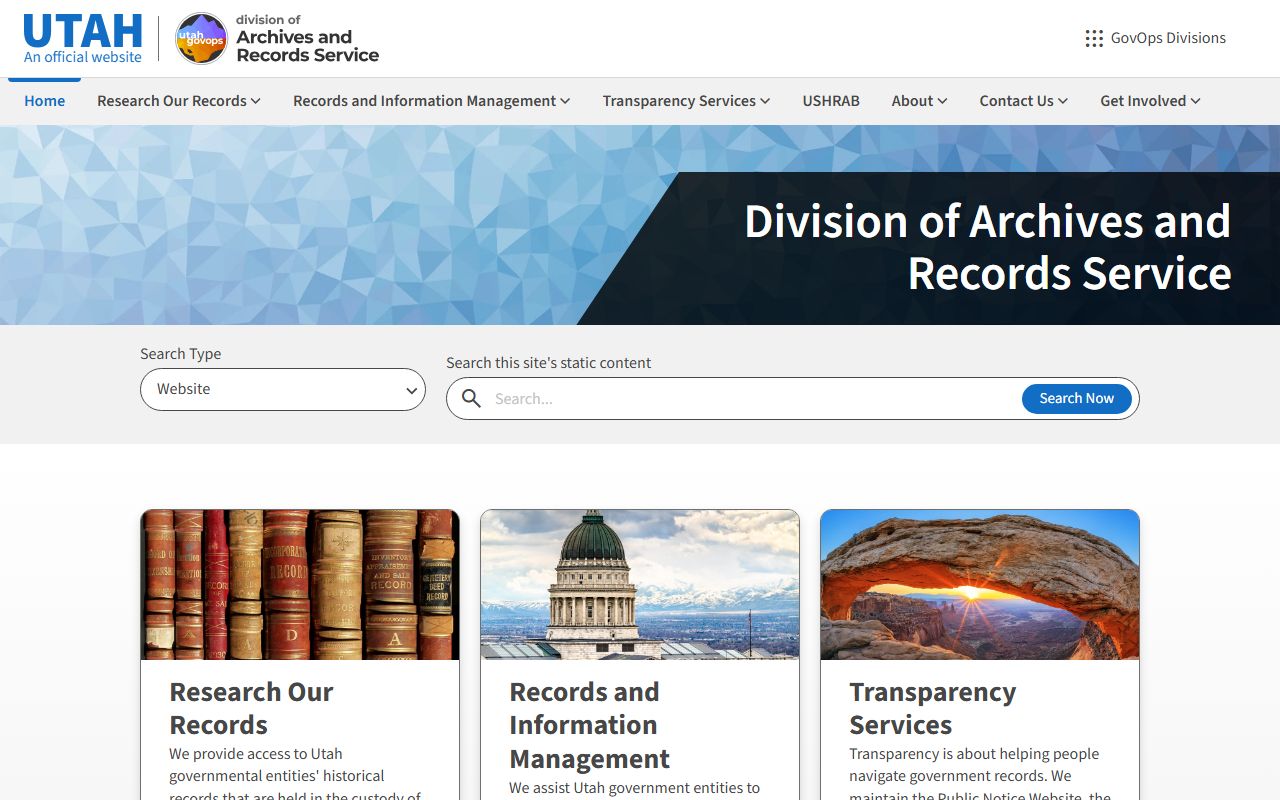
The state archives image is a good fit because American Fork often needs a broader government record trail to connect the city office to earlier family evidence.
| Office | American Fork City Recorder |
|---|---|
| Address | 31 S Main Street American Fork, UT 84003 |
| Phone | 801-763-3000 |
| Records | Historical city records |
American Fork Genealogy at the City Cemetery
The American Fork Cemetery is one of the best burial sources for American Fork Genealogy because it preserves burial records dating to the 1850s. The cemetery office at 26 W 300 N, American Fork, UT 84003, phone 801-756-3431, can help with burial records and lot information. That is useful because a burial record can confirm a death date, but it can also show whether a family cluster was buried together or whether a surname repeated across multiple lots. In an older Utah County city, those details often matter more than a single register entry.
Burial evidence is especially helpful when a death notice is brief or when a family appears in a city record without an obvious next step. The cemetery can show the physical place behind the name, and that often clarifies a household line that otherwise looks scattered. American Fork Genealogy becomes much more dependable once the cemetery record is checked against the recorder and county materials.
Lead-in source: American Fork Cemetery.

The newspaper image is useful here because local notices often identify the burial place or family relationship that sends a researcher to the cemetery in the first place.
American Fork Genealogy in Utah County Records
Utah County records are the older framework for American Fork Genealogy because the city was founded in the early territorial period. Marriage, land, probate, and civil records from the county often hold the first fixed proof of residence or family connection. If a family lived in American Fork before the city recorder's useful historical records, county material is usually where the earliest household structure becomes visible. Even when the city file is helpful, the county trail can explain why a family stayed, where they owned land, and how they moved through the area over time.
That county layer also helps distinguish one family from another when surnames repeat across generations. A land transfer may identify an heir, a marriage may link two family lines, and a probate record may place a death in a more exact chronology. American Fork Genealogy becomes easier to trust when those county records are compared with the city recorder and cemetery rather than read in isolation. The county is often what turns a broad family name into a specific household history.
American Fork research usually works best when the county record set is treated as the bridge between the city's long civic history and the later statewide certificate system. That bridge is where many early Utah County family details survive.
American Fork Genealogy in State Collections
State collections widen American Fork Genealogy beyond local offices. The Utah State Archives can add government and court context, Utah State History helps with place-history reference, and Utah Vital Records is the state route for modern certificates. The FamilySearch Utah Genealogy wiki is useful for sorting the record groups, while the Library of Congress Utah local history guide and the Utah Population Database provide broader research context for household and migration patterns.
Lead-in source: Utah State History.

The historical society image fits because place history often explains how the American Fork family trail moved from settlement years into city-era records.
Those state sources matter because American Fork families often appear in the local record trail before they appear in a statewide index. A burial, a city record, and a local history item may each answer a different question, but together they can prove that a family line belongs to the same place and time.
American Fork Genealogy Newspapers and Context
Utah Digital Newspapers adds the kind of detail that official records usually leave out. For American Fork Genealogy, obituaries, funeral notices, community announcements, church items, and school references can identify relatives, addresses, and dates that never appear in a city register. Newspapers are especially valuable when a burial clue or a surname appears in more than one family line. They help determine whether two similar references are the same household or two different families with the same name.
That context matters because American Fork has enough history to generate overlapping record trails. A newspaper item may identify a spouse or a burial place that lets you tie together city, cemetery, and county records. When those sources agree, the family reconstruction becomes much easier to defend. American Fork Genealogy works best when the newspaper is used as the connective tissue rather than as a final answer.
Lead-in source: Utah Digital Newspapers.
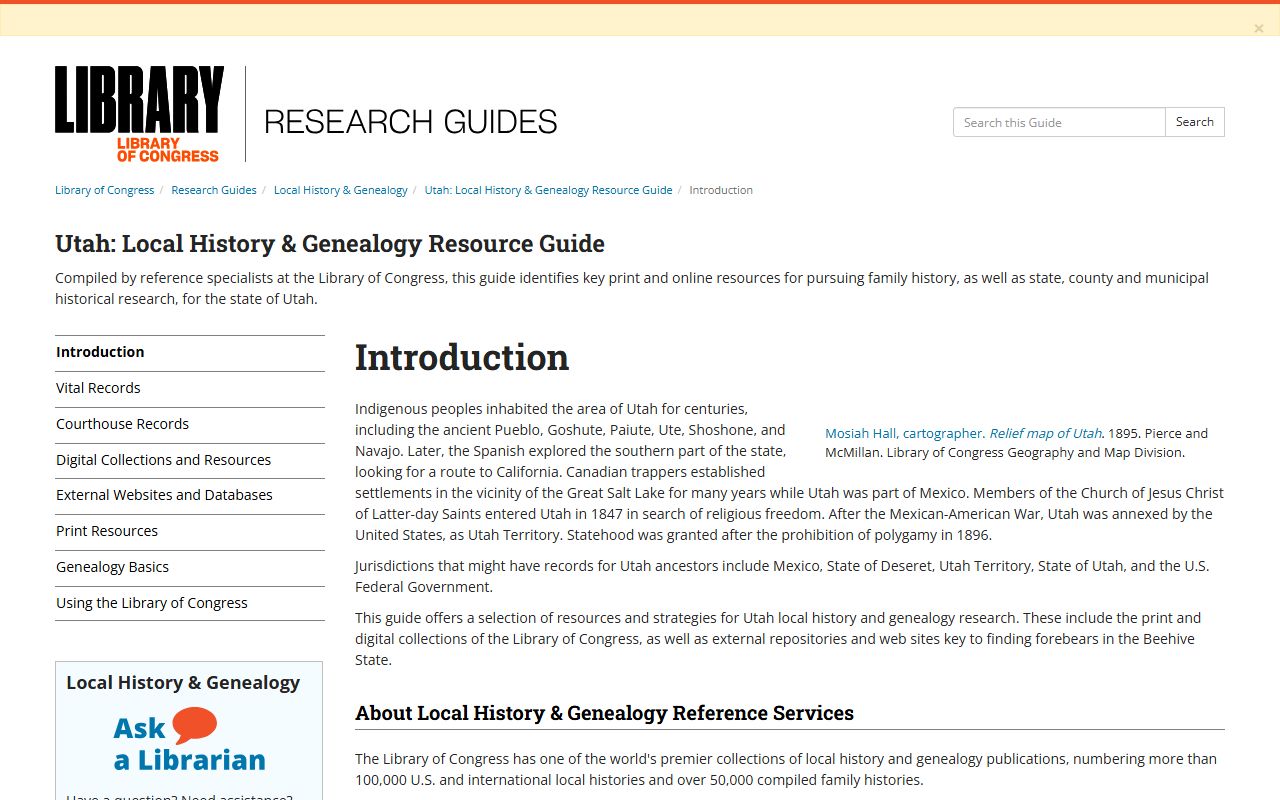
The Library of Congress image fits here because local-history guidance is often what helps a researcher interpret a newspaper clue in the right Utah County context.
American Fork Genealogy Research Path
The most efficient American Fork Genealogy workflow starts with the city recorder for the incorporated-era paper trail, then moves to the cemetery for burial evidence, then into Utah County records for marriage, land, and probate detail. After that, state repositories and newspapers fill the remaining gaps. That order matches the city's long record history and keeps the search grounded in the right timeline.
American Fork is one of the better Utah County cities for family history because the local record trail is old enough to overlap across offices and source types. Once the city, cemetery, county, and state layers are compared, the result is a documented household history rather than a loose collection of references.