
Search Utah Genealogy
Utah Genealogy research often starts with a name and a place, then grows through county courthouses, cemetery files, newspapers, and state archives. This page brings those Utah Genealogy sources into one path so you can search for births, deaths, marriages, burials, probate records, land records, and local history collections without bouncing between offices blindly. Some records sit with county clerks and recorders. Others moved to statewide custody after 1905. A few of the best Utah Genealogy leads come from burial databases, digitized newspapers, and research libraries that help fill gaps before formal registration became routine.
Utah Genealogy Quick Facts
Utah Genealogy Record Types
Utah Genealogy work rarely stays in one record set for long. A death certificate may lead you to a cemetery register, a newspaper notice, and then a probate file. A marriage record can point to a county clerk series, a FamilySearch microfilm run, and a statewide verification. Utah split recordkeeping between counties, cities, churches, courts, and state agencies over time, so the best search plan is to match the event date to the office that held the record in that era.
For births, Utah research is strongest from 1905 forward, with general statewide compliance improving by 1917. Earlier Utah Genealogy searches often turn to county birth registers from 1898 to 1905, church records, family Bibles, and local newspapers. Death research follows a similar pattern. County and city registration appears before statewide practice became reliable, then later records move into the Utah Office of Vital Records and the historical death certificate index at the Utah State Archives.
Marriage and land records can reach much farther back. County clerks began keeping marriage records in 1887, while county recorder offices preserve deeds, plats, and property documents from the 1850s forward in many parts of Utah. Probate, court, naturalization, and military records also matter for Utah Genealogy, especially when you need proof of kinship, migration patterns, or family property ties across generations.
Utah Genealogy At The Archives
The strongest statewide starting point is the Utah State Archives and Records Service. It preserves permanent records from state agencies, courts, counties, and cities, including birth certificates, death certificates, probate files, court records, naturalization documents, military records, prison files, land records, and county tax ledgers. For Utah Genealogy, the archive is valuable because it connects official custody with searchable name indexes and a digital archive that reaches beyond a single county office.
Use the Archives when your search falls into a record series that became public over time. Utah research rules described in Utah Code Title 26 and related access provisions make older birth records public after 100 years and older death records public after 50 years. The Archives also coordinates access to digitized death certificates from 1904 to 1961 and early birth certificates from 1905 to 1913, which helps Utah Genealogy researchers move quickly from statewide indexes to original images.
Start this part of the search with the Archives research center in Salt Lake City if you need staff help or a finding aid. Shift to county and city offices when a series is not yet transferred. That split matters in Utah Genealogy because county probate, land, and marriage records may remain more complete locally even when statewide indexes exist.
One useful statewide stop is the main Archives portal at archives.utah.gov.
The digital and in-person archive tools work best when you already know a county, date range, or record series name, but broad name index searching can still surface overlooked Utah Genealogy leads.
Note: When county research seems thin, the Archives can bridge gaps with transferred court files, older certificates, and statewide indexes that point back to a local source.
Utah Birth And Death Genealogy
Utah Genealogy searches for births and deaths depend heavily on date. Before 1898, no consistent official registration was required, so church records, cemetery records, local newspapers, family papers, and community histories carry more weight. From 1898 to 1905, county and city registration appears in scattered form. From 1905 on, the state began taking control, though compliance improved over time rather than all at once.
The Utah Office of Vital Records and Statistics maintains birth certificates from 1905 to the present and death certificates from 1905 to the present. It also handles requests by mail and online through the Utah system. For Utah Genealogy, that office is most useful when you need a certified modern record or need to understand what is still restricted. Public access rules matter. Older records open up through the historical framework in state law, while recent records still require a direct, tangible, and legitimate interest.
The CDC Utah vital records guide is also useful when you need a second official summary of the office address, fee structure, and ordering route. That kind of cross-check helps with Utah Genealogy because county and city researchers often encounter records that shifted from local custody to statewide custody over time.
A statewide ordering and access reference is available through Utah Vital Records.
That office supports current requests, while the historical copies and early indexes often send Utah Genealogy researchers back to the Archives for older public records.
The legal side of access matters too. Birth records under 100 years and death records under 50 years stay restricted under Utah law, so genealogists often combine state ordering, county context, cemetery evidence, and newspaper notices to document a family line.
A direct law reference for Utah Genealogy access rules appears at Utah Code Title 26.
Spreading legal references through the search process makes the page more useful than isolating them in a single statute block, because access and search strategy are tied together in Utah Genealogy work.
Utah Marriage And Burial Genealogy
Marriage research in Utah Genealogy usually begins at the county clerk level. County clerks started recording marriages in 1887, and the state later added statewide marriage and divorce coverage for later periods. That means your first move should often be local, especially when you know the county or suspect a couple married near a family settlement area. The county page set on this site follows that logic.
When you do not know the county, use broad statewide and regional tools. The FamilySearch Utah Genealogy wiki explains Utah record timelines and points researchers toward county collections, probate files, land records, and digitized certificate groups. Burial work often moves faster through the Utah Cemeteries and Burials Database, which holds information on hundreds of thousands of burials and can be searched by name, county, city, cemetery, and date range.
For Utah Genealogy before statewide death registration became routine, cemetery records can become the backbone of proof. Sexton books, burial dates, place of death, and grave locations often supply clues that can then be checked against newspaper notices or church files. That is especially true when a family appears in rural counties where early civil registration was uneven.
Researchers who need a broad marriage index can also compare county clerk records with BYU-Idaho's Western States Marriage Index at wsmbrowser.com. Use it as a lead finder rather than the last word, then return to the county clerk or Archives for the underlying record.
The Utah historical society burial resource is one of the best statewide search tools at Utah State History.
That statewide collection pairs well with county clerk marriage books because both help Utah Genealogy researchers reconstruct family relationships before modern databases became standard.
Utah Genealogy In Newspapers
Newspapers are one of the richest Utah Genealogy sources because they capture everyday family detail that vital records do not. Obituaries, wedding notices, birth announcements, probate notices, business changes, school items, and social columns can place a person in a town even when formal records are late or missing. The Utah Digital Newspapers project provides access to more than 3 million pages and lets you search by keyword, title, county, and date range.
Use newspapers to verify dates, spellings, migrations, church ties, and burial locations. This matters in Utah Genealogy because names often shift in spelling, and a newspaper mention can connect a person to a county courthouse, cemetery, mining camp, or ward record. Search with broad terms first, then narrow by county and year. If an obituary names siblings or children in other towns, that often opens the door to more county pages and family branches.
A reliable newspaper entry point for Utah Genealogy is Utah Digital Newspapers.
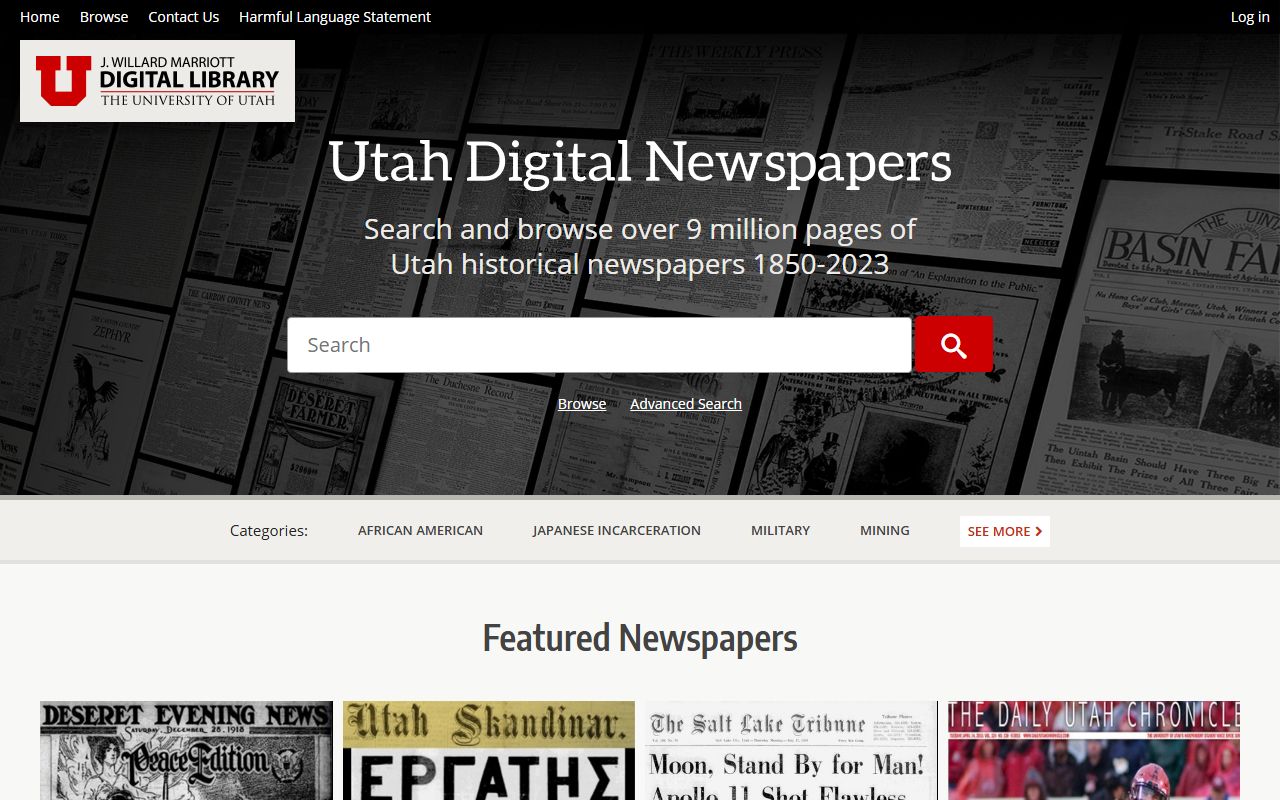
It is one of the best free tools for linking state-level Utah Genealogy with county-level people, places, and dates.
Another library-oriented route is the Library of Congress Utah local history and genealogy guide, which outlines where births, deaths, marriages, divorces, and church records sit across different periods.
A broader state library access point is Pioneer, Utah's online library, which can help researchers find digitized history tools and premium resources through participating libraries.
Utah County Genealogy Offices
County offices still matter on nearly every Utah Genealogy path. County clerks hold marriage records and some early birth and death registers. County recorders maintain deeds, plats, mining claims, and property history. County courts and probate series can identify heirs, land transfers, guardianships, and estate distributions. When a family moved across counties, those local offices often preserve the details that statewide summaries leave out.
Utah county pages on this site focus on that local split. Some counties have robust online clerk or recorder systems. Others require in-person research, phone contact, or a shift to state and university collections when local material has been microfilmed or transferred. Utah Genealogy becomes more accurate when you match the county creation date and settlement period to the kind of record you expect to find.
The same logic applies in cities. Some larger municipalities kept their own birth and death registers for part of the twentieth century, while newer cities mainly preserve ordinances, council records, and cemetery or local history references. Those city pages help narrow what belongs to the city, the county, or the state in a Utah Genealogy search.
Utah Research Libraries And Databases
Utah Genealogy is unusually strong in research facilities. The Family History Library in Salt Lake City, the Utah State Archives, Utah State History, local libraries, and university archives all add something different. The Utah Population Database supports approved research by linking genealogy data with vital and health records. It is not a walk-up public search like a county clerk system, but it shows the depth of Utah's family history infrastructure.
Researchers should also compare broad state guidance with local repositories. The Library of Congress guide is useful for record timelines. The FamilySearch Utah Genealogy wiki gives county-by-county research pointers. The state historical society and library networks supply directories, yearbooks, maps, photographs, and local history collections that can confirm family residence or community ties between census years.
A national-reference view of Utah Genealogy appears at the Library of Congress Utah guide.
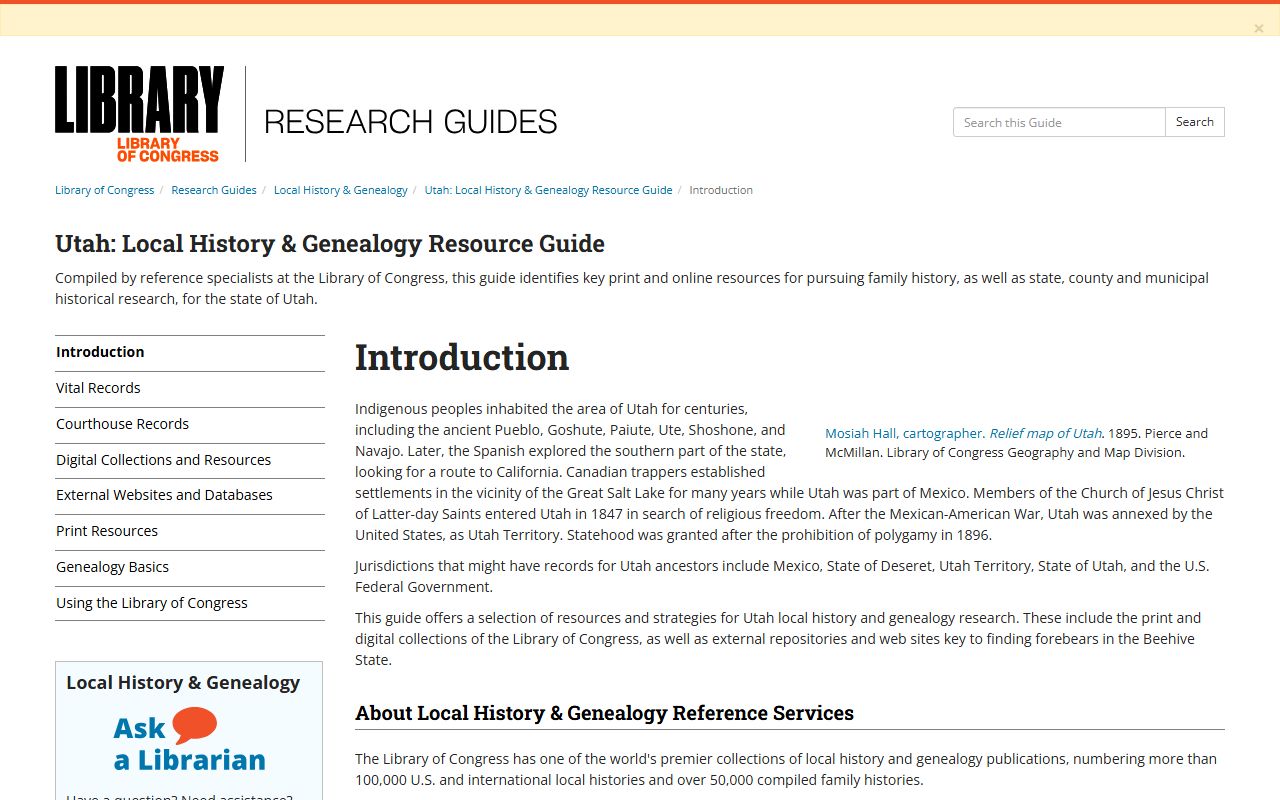
That guide helps researchers place county, church, territorial, and state records on a useful timeline before ordering copies or planning a courthouse trip.
For specialized academic and health-linked research, the Utah Population Database offers another long-view perspective on family lines and linked records.
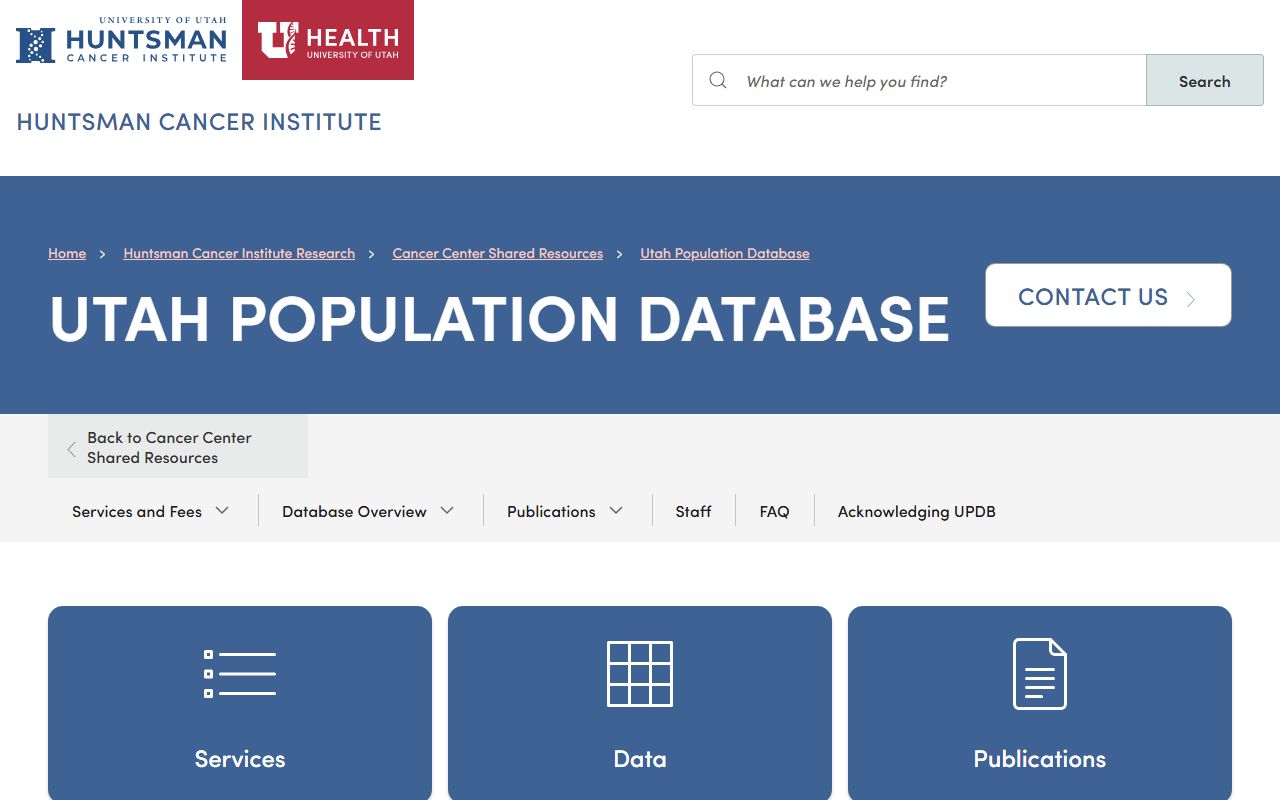
It is not the first stop for a basic family search, but it shows how far Utah Genealogy can extend once you move beyond simple certificate requests.
Note: When a local office cannot answer a question directly, a library or archive collection often supplies the context needed to return to that office with a narrower request.
How To Search Utah Genealogy
Start with what you know. Use names, date ranges, and place names you can defend. Then move from the most direct civil record to supporting evidence. In Utah Genealogy, that often means looking for a birth or death record, checking a burial database, confirming a newspaper notice, and then pulling a county land or probate record when family ties still need proof.
The workflow is simple, but it should stay flexible:
- Search statewide archives and newspaper databases first for broad name hits.
- Check county clerk and recorder offices for marriages, deeds, and probate series.
- Use cemetery and burial databases when deaths predate strong civil registration.
- Compare city, county, and state custody based on the event year.
- Use directories, yearbooks, and local history collections to bridge gaps.
When you hit a dead end, shift sideways rather than stopping. Utah Genealogy problems are often solved by changing record type, not by repeating the same search with the same spelling. A cemetery record can reveal a ward. A land record can identify an heir. A newspaper notice can tell you which county clerk book to request.
The CDC summary of Utah certificate ordering can help if you need a quick official reminder at cdc.gov.
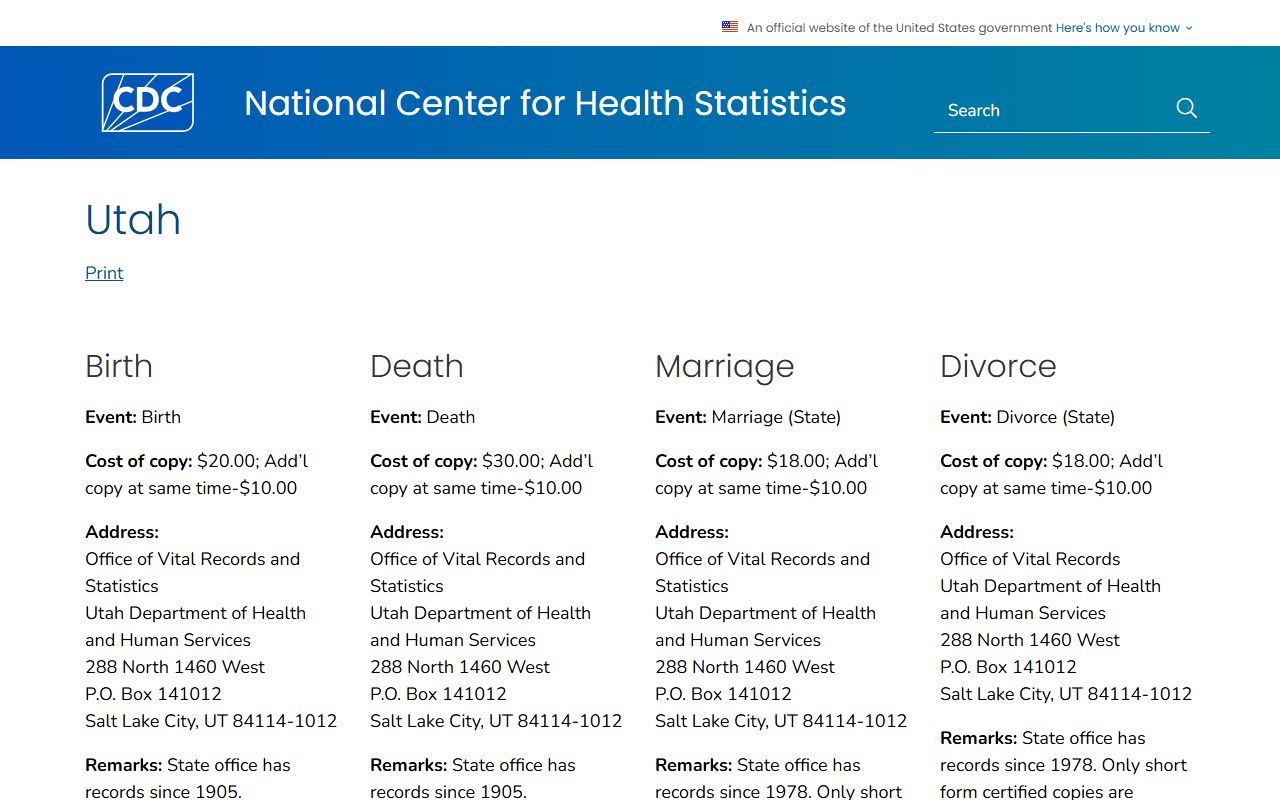
It is a concise support source, while the county and state pages provide the deeper Utah Genealogy detail that usually makes a search successful.
Browse Utah Genealogy By County
County pages explain where local Utah Genealogy records sit, what the clerk or recorder keeps, and which statewide tools help when a county series is thin or restricted.
Utah Genealogy In Major Cities
City pages help sort out whether a Utah Genealogy question belongs with a city recorder, cemetery office, county clerk, or a statewide archive.