
Cache County Genealogy Guide
Cache County Genealogy research works best when you treat Logan, county offices, Utah State University, and statewide sources as one connected archive. Cache County was organized in 1856 from Weber County, and Logan became the county seat, so the county paper trail is centered there even when the family story begins elsewhere in northern Utah. Modern records live at the clerk and recorder offices, but older land, probate, and local-history material is scattered across courthouse collections, university archives, newspapers, cemeteries, and Utah research guides. Start with the record that matches your date range, then widen the search until the family line makes sense.
Cache County Genealogy Overview
Cache County Genealogy usually begins with Logan because that is where the county's main offices and many local records converge. The county clerk, county recorder, and the university archives each preserve different parts of the story. That matters in a county with a strong mix of agricultural, civic, and family-centered records because the same surname may appear in marriage papers, land transfers, probate files, and school or directory material all at once. A good search plan respects those separate record groups instead of assuming one office will hold everything.
The best broader resources are the Utah State Archives, Utah State History, Utah Vital Records, FamilySearch Utah Genealogy, Utah Digital Newspapers, Utah Cemeteries and Burials, the Library of Congress local history guide, and the Utah Population Database. Each one answers a different question. Some help you confirm a life event, some show where a family lived, and some help you understand how a name moved through the county over time. Cache County Genealogy becomes more reliable when the county office search is paired with those statewide sources.
Cache County Genealogy at the County Clerk
The Cache County Clerk is one of the most important starting points for Cache County Genealogy because it preserves marriage records from 1887 and birth and death records from 1898 to 1905. Those dates matter because they define when the county clerk can help and when you need to move to another office or a statewide collection. The clerk's office is at 179 N Main St, Suite 101, Logan, UT 84321, the phone number is 435-755-1460, and the office is open Monday through Friday from 8:00 AM to 5:00 PM.
For genealogists, marriage records are often the first civil document that ties two family lines together. A birth or death entry can also identify a parent, spouse, or place of residence that does not appear in a later record. Use the clerk's site as your first county-level stop, then compare what you find with cemetery, newspaper, and recorder records so the family timeline stays consistent.
Lead-in source: Cache County Clerk.
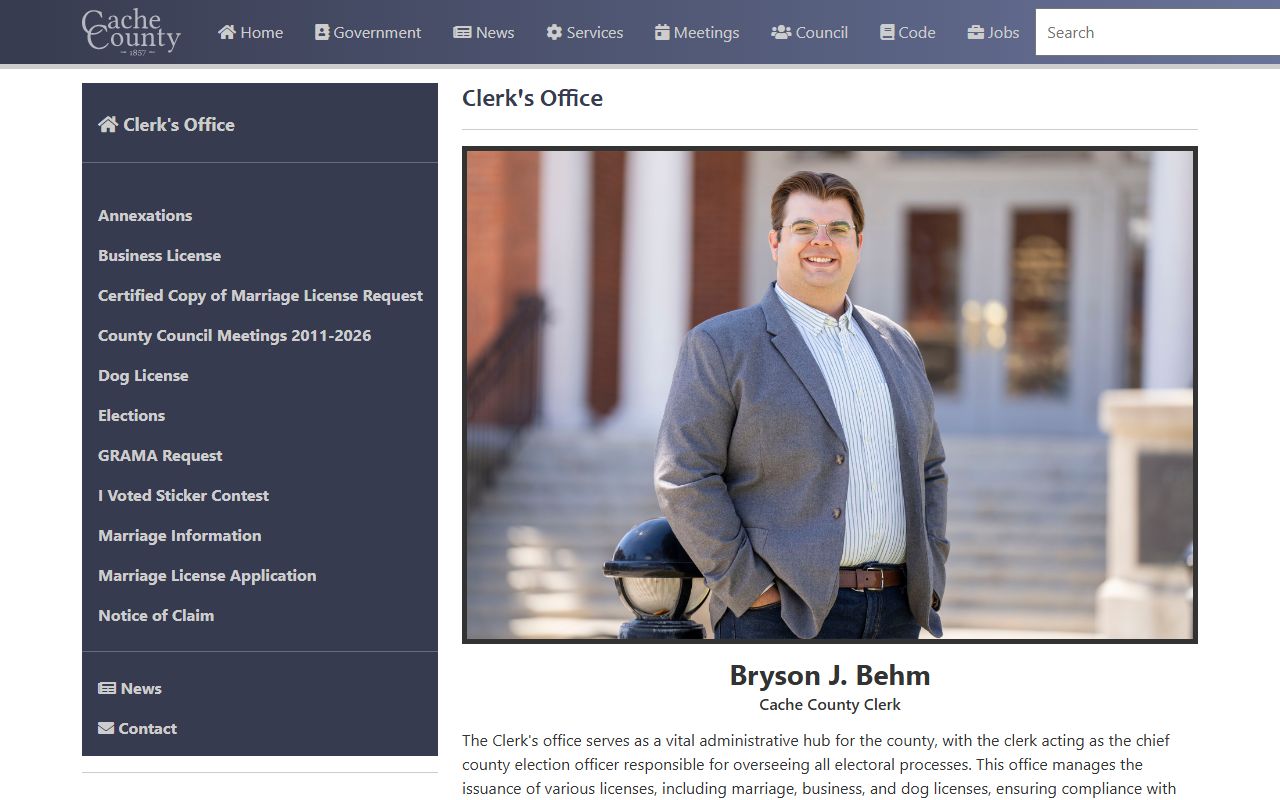
That office is the fastest way to confirm a modern family event in the county before you move into older Logan or Utah State collections.
| Office | Cache County Clerk |
|---|---|
| Address | 179 N Main St, Suite 101 Logan, UT 84321 |
| Phone | 435-755-1460 |
| Hours | Monday through Friday, 8:00 AM to 5:00 PM |
| Records | Marriage records from 1887 and birth and death records from 1898 to 1905 |
Cache County Genealogy Land and Property Records
The Cache County Recorder handles the land trail that often proves where a family lived from one decade to the next. Its CORE system offers free online access by address, owner, or parcel, which makes it especially helpful for Cache County Genealogy when a surname moves across townships, farms, or subdivisions. The office is at 179 N Main St, Logan, UT 84321, the phone number is 435-755-1530, and the hours are Monday through Friday from 7:00 AM to 6:00 PM.
Copy fees are listed at $0.25 per page, with certified copies at $5 per document. That is useful to know if you need a deed, a plat reference, or a recorded property transfer for a family reconstruction. The recorder's records can place a family in a specific part of Logan or Cache County even when a census entry is missing, and that spatial context often helps with cemetery and newspaper searches later.
Lead-in source: Cache County Recorder.
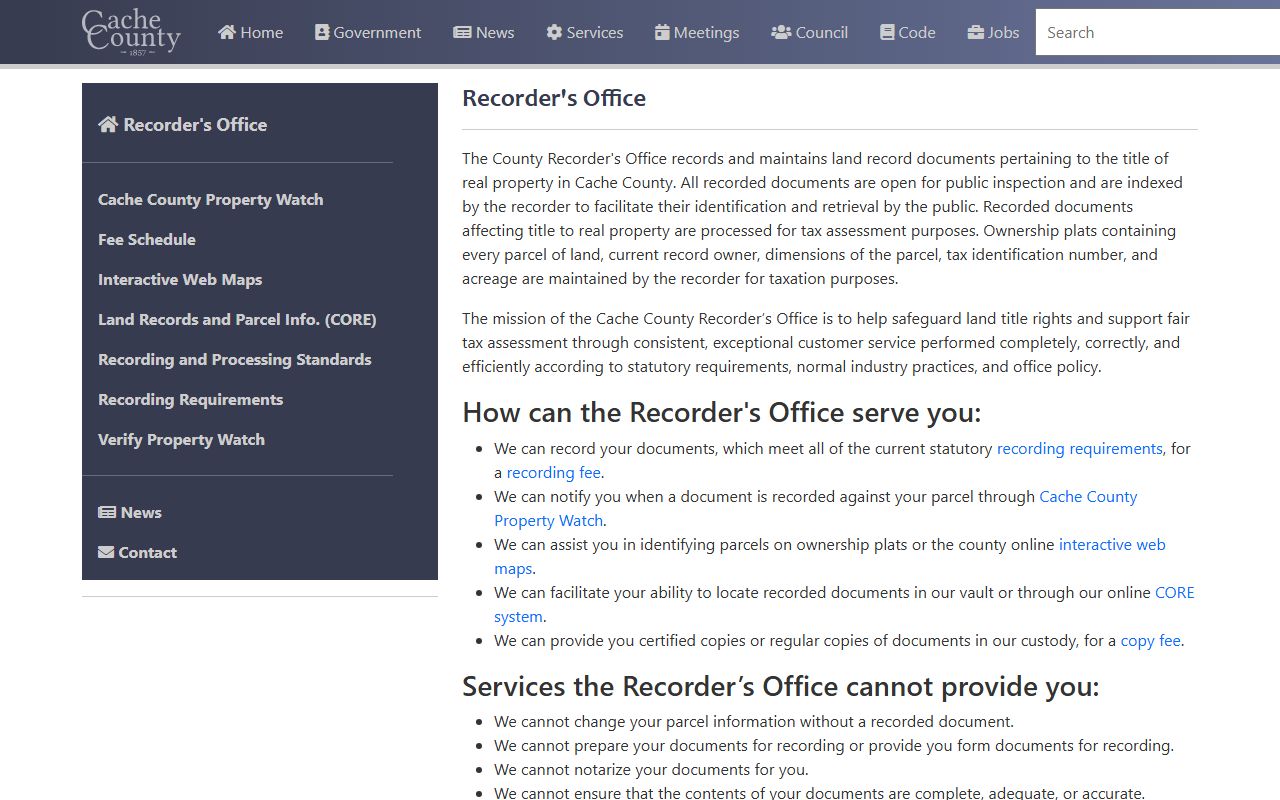
The recorder's access tools make it easier to follow land ownership, family transfers, and long-term residence patterns in Cache County Genealogy.
| Office | Cache County Recorder |
|---|---|
| Address | 179 N Main St, Logan, UT 84321 |
| Phone | 435-755-1530 |
| Hours | Monday through Friday, 7:00 AM to 6:00 PM |
| Access | Free online search by address, owner, or parcel through CORE |
| Copy Fees | $0.25 per page; certified copies $5 per document |
Cache County Genealogy at Utah State University
Utah State University is a major Cache County Genealogy partner because its archives hold county records from 1860 to 1987. The collection description points to probate bonds, letters, wills from 1876 to 1887, register of county officers from 1909 to 1971, inheritance tax and lien books, probate minute books, mining district records, and tax assessment records. Those are the sorts of documents that help you bridge the gap between a family name and a documented life in the county.
That archive set is not just for court researchers. A probate minute book can show heirs, a tax assessment record can show property ownership, and a mining district record can tie a person to a local occupation or rural district. Cache County Genealogy often becomes much richer when you stop thinking only in terms of birth and death and start reading the county's administrative records as family records too. For northern Utah context, USU's genealogy resources also point to local directories, yearbooks, and tax assessment photos that can add household detail.
Lead-in source: Cache County records at USU.
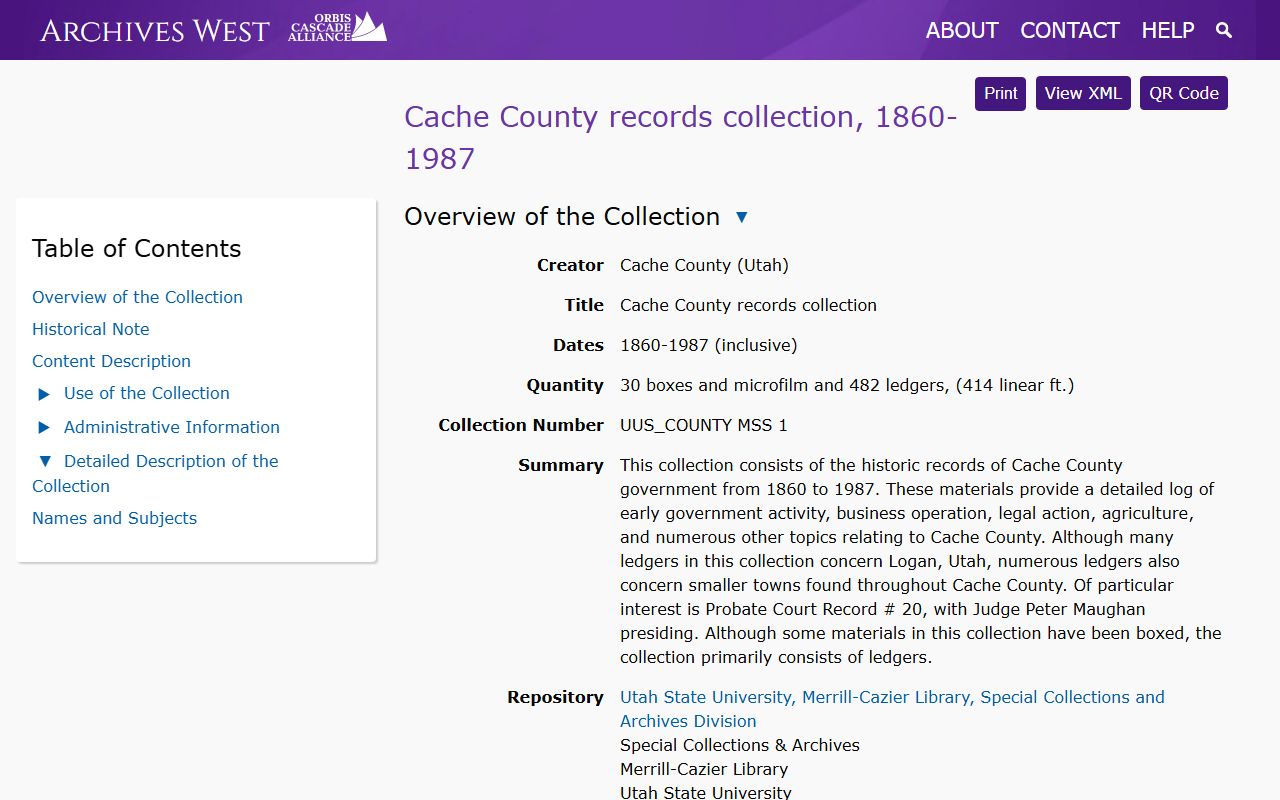
That collection helps turn courthouse fragments into a fuller family timeline, especially for Logan-area households that show up across several county record types.
Cache County Genealogy in FamilySearch and Newspapers
FamilySearch has a Cache County collection that is especially valuable because it is images only and does not have a searchable index. That means you often need a name, an approximate date, or a known location before you begin. The collection includes deeds from 1869 to 1941, grantor and grantee indexes, townsite deeds from 1886 to 1917, and military discharges from 1942 to 1955. For Cache County Genealogy, those materials are excellent for tracking land, service history, and families that stayed in the county across generations.
Newspapers and burial tools fill in the gaps. Utah Digital Newspapers can surface notices, obituaries, and community references that never reached a county file. The Utah Cemeteries and Burials page helps when you need a burial location or cemetery name, while the FamilySearch Utah Genealogy wiki can direct you toward broader research methods and local holdings. Together these sources often resolve the problem of a missing county certificate or a hard-to-read deed entry.
Cache County Genealogy and Utah State Resources
Statewide collections matter because Cache County Genealogy is not limited to one courthouse. The Utah State Archives can preserve county and state context, Utah State History can help you understand the place history around Logan, and Utah Vital Records gives you the state-level certificate path for modern births, deaths, marriages, and related events. If you are checking whether a record exists at the state level, the CDC Utah vital records page and Utah Vital Records are useful starting points.
The Library of Congress Utah local history guide and the Utah Population Database add another layer. The LOC guide helps point you to local-history tools, and the UPDB can provide a broader research context when you need to understand family movement, settlement patterns, or data linkage across generations. That is particularly helpful in a county like Cache, where a family may show up in farm records, university material, and a burial entry before the same person appears in a statewide certificate index.
Cache County Genealogy Research Path
A clean Cache County Genealogy plan usually moves from the most specific record to the broadest one. Start with the clerk if you need a marriage or a late vital record, then check the recorder for land and residence, then move to USU archives for probate and county administration. After that, use FamilySearch images, newspapers, cemeteries, and Utah state tools to fill the gaps. That order keeps the search efficient and prevents you from overlooking a county file that may already answer the question.
Cache County has enough surviving material to reward a layered search. The county offices give you date-specific civil and property evidence, the university archives add depth, and the state-level collections make the story broader and easier to confirm. Once those pieces are combined, Cache County Genealogy becomes less about hunting for a single document and more about building a documented household history.