
Carbon County Genealogy Records
Carbon County Genealogy work begins with a county that grew up around coal. Carbon County was created on March 8, 1894, from Emery County, and the county seat is Price. The county name itself points to the coal deposits that shaped the area, which is useful when you trace families through mine work, property transfers, and local court files. The clerk, recorder, FamilySearch, and newspaper sources all help reveal different parts of the same family story, and the county's early record run starts close enough to the settlement period that most lines can be followed without much guesswork.
Carbon County Genealogy Offices
The Carbon County Clerk is the office most researchers use first. It keeps marriage records from 1894, birth and death records from 1897 to 1905, and probate, court, and land records from 1894 to the present. The office is at 120 E Main Street in Price, UT 84501, with phone number 435-636-3221 and weekday hours from 8:00 AM to 5:00 PM. Certified marriage copies are available, which can be useful when a family name appears in later land or probate work.
The Carbon County Recorder handles the land side of Carbon County Genealogy. The recorder keeps land records, deeds, and property documents from 1894 to the present, and the office pays special attention to mining claims and mineral rights. That is important in a county where coal-related work shaped settlement, because property records may mention claims, transfers, or heirs in ways that ordinary vital records do not.
Carbon County has no known courthouse disaster history. That makes the record trail from the 1890s through the early twentieth century more stable than many researchers expect in a county built around mining growth.
Carbon County Genealogy Clerk Records
The clerk's office carries the essential civil run for Carbon County Genealogy. Marriage files begin in 1894, and the birth and death register reaches from 1897 to 1905. Those records matter because they can tie a family to a place, a spouse, and a rough household structure before later census work fills in the rest. Probate, court, and land records also begin in 1894, which means the clerk office can connect a marriage, an estate, and a property entry within the same county timeline.
The clerk image below comes from the county's own office page, and it shows the official setting that supports Carbon County Genealogy searches. It is a good visual reminder that the county office is the right place to ask for a certified copy or an early record search.
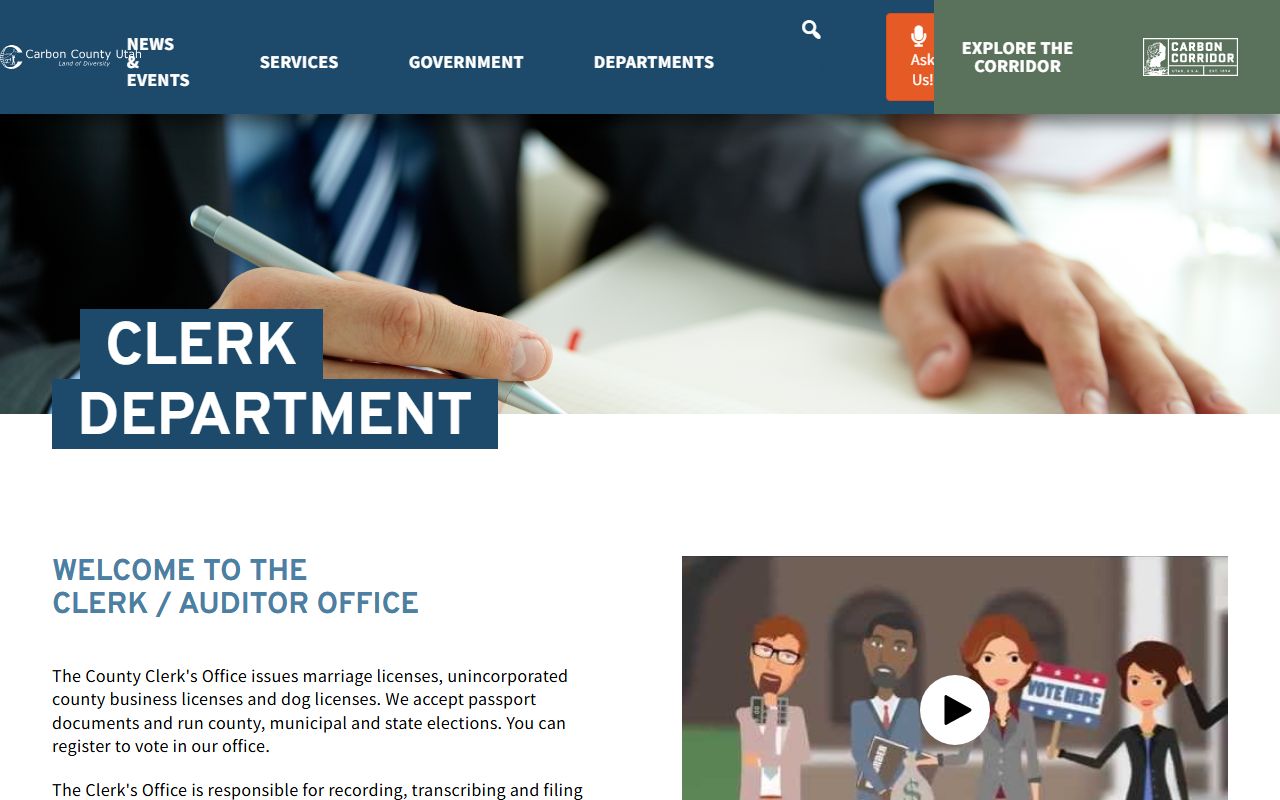
A single clerk file can identify witnesses, prior residences, or the next office a family should be checked against. That kind of clue is especially valuable in Carbon County, where miners, merchants, and farm families often appear in the same book but for different reasons.
Carbon County Genealogy Recorder Records
The recorder's office is just as important for Carbon County Genealogy because land and mining files often tell the story behind the family move. The office keeps land records, deeds, and property documents from 1894 forward, and it also handles mining claims and mineral rights documents. In a coal county, those records can explain not only who owned the land but also who had a right to work it or pass it on.
The Carbon County Recorder page gives researchers a direct view into those property files. The screenshot below comes from that office page and helps show the recorded-property side of Carbon County Genealogy work. When a family shows up in a deed, the recorder may be the office that links a widow, an heir, or a miner to a specific parcel.
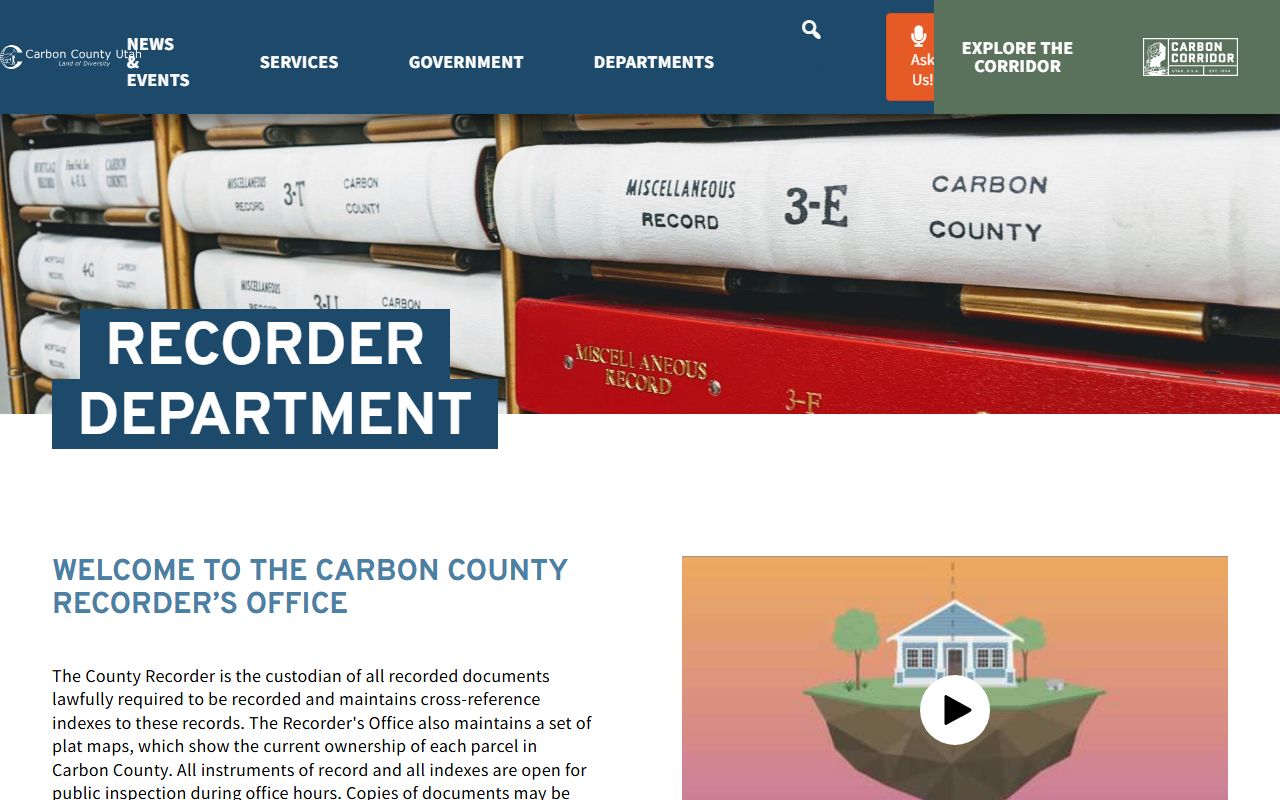
That kind of property trail can be just as helpful as a marriage record. It often explains why a family stayed near Price, moved to a company town, or appears in probate after a mining-related death.
Carbon County Genealogy and County History
The county home page is a useful context source for Carbon County Genealogy because it shows the county in its own civic setting. The image below comes from Carbon County, and it helps tie the county seat, the local offices, and the county history together. Carbon County was named for the coal deposits in the area, and that detail matters when you are reading older records that mention mines, contracts, or rail-related work.
Price anchors much of the county record story, but the broader history explains why some surnames appear in the same neighborhoods year after year. Family work in Carbon County often follows the line between home, mine, and court file. That pattern can be easier to see when you keep the county history in view as you search.
The Utah State History site and the Library of Congress Utah local history guide are both useful when you want that wider frame. They help you place Carbon County Genealogy records in a deeper settlement story instead of treating each file as a one-off entry.
Carbon County Genealogy on FamilySearch
The FamilySearch Carbon County Genealogy page confirms the county's creation date, the Price county seat, and the lack of a known courthouse disaster. It also points to Family History Library microfilm that includes birth registers, marriage licenses, probate records, and land records. That makes FamilySearch a strong planning tool before you request a copy or make an in-person visit.
For Carbon County Genealogy, FamilySearch is most useful when you need to connect one record group to another. A marriage date can lead you to a probate file. A probate file can lead you to a land transfer. A land transfer can show where a family lived when the census only gave you a township and a surname. That chain matters in a county where coal and property often moved together.
Note: Carbon County's microfilm coverage and lack of a courthouse disaster make the county unusually workable for researchers who want a clean early timeline.
Carbon County Genealogy Research Tips
When you start a Carbon County Genealogy search, begin with the clerk for civil records and the recorder for property. Then use newspapers to fill in the life between those documents. The local and statewide paper trail often shows a family more clearly than one office record does, especially if a miner moved jobs or a widow sold land after a death. The county's record base is strong enough that one clue often leads to the next with very little wasted motion.
The Utah Digital Newspapers collection is especially useful for obituaries, death notices, and mining-related stories that do not always appear in the county books. When a deed looks thin or a marriage date is off by a year, a newspaper item can settle the question fast. That makes the paper record a good partner to the clerk and recorder rather than a replacement for them.
Note: Mining claims and mineral rights records matter in Carbon County as much as deeds, so do not stop after the first property search.