
Logan Genealogy Sources
Logan Genealogy begins with one of northern Utah's oldest civic record trails, which makes the city unusually useful for family history work. Logan was settled in 1859 and incorporated in 1866, so the recorder, cemetery, and local history library all sit on top of a long municipal history instead of a short modern one. The city recorder preserves birth and death records for events within city limits from 1890 to 1905, while the cemetery reaches back to burials from the 1860s. Add the local history library, Cache County records, and Utah state collections, and Logan becomes a place where the family story can usually be built from several overlapping sources rather than a single file.
Logan Genealogy at the City Recorder
The Logan City Recorder is the first office to check when a family event falls inside the 1890 to 1905 city birth and death window or when you need a municipal record that places a family in Logan before the twentieth century fully settled in. That date range is narrow, but it matters because it covers events within city limits that never had to be captured in the same way by later statewide systems. For Logan Genealogy, a recorder file can confirm a date, place a household in the right municipal era, or connect a surname to a city action that would otherwise be easy to miss.
The recorder office is at 290 N 100 W, Logan, UT 84321, and the phone number is 435-716-9000. Because the office preserves historical city records alongside those early vital entries, it is worth checking whenever a family clue points to an old Logan address or an ordinance, resolution, or city action. Logan Genealogy gets much more precise when the recorder is treated as the first layer of a much longer local paper trail rather than the final answer.
Lead-in source: Logan City Recorder.
| Office | Logan City Recorder |
|---|---|
| Address | 290 N 100 W Logan, UT 84321 |
| Phone | 435-716-9000 |
| Records | Birth and death records for events within city limits from 1890 to 1905, plus historical city records |
Logan Genealogy at the Local History Library
The Logan Library local history collection is a major companion to Logan Genealogy because it gathers the kind of material that makes a city history legible: local newspapers, compiled histories, photographs, maps, books, and other research aids. Unlike a recorder office, a local history library can connect a surname to the way Logan looked and functioned at a specific moment. That matters when you are trying to understand a family not just as a name in a register, but as part of a neighborhood, a ward, a business district, or a community network.
Lead-in source: Logan Library local history.
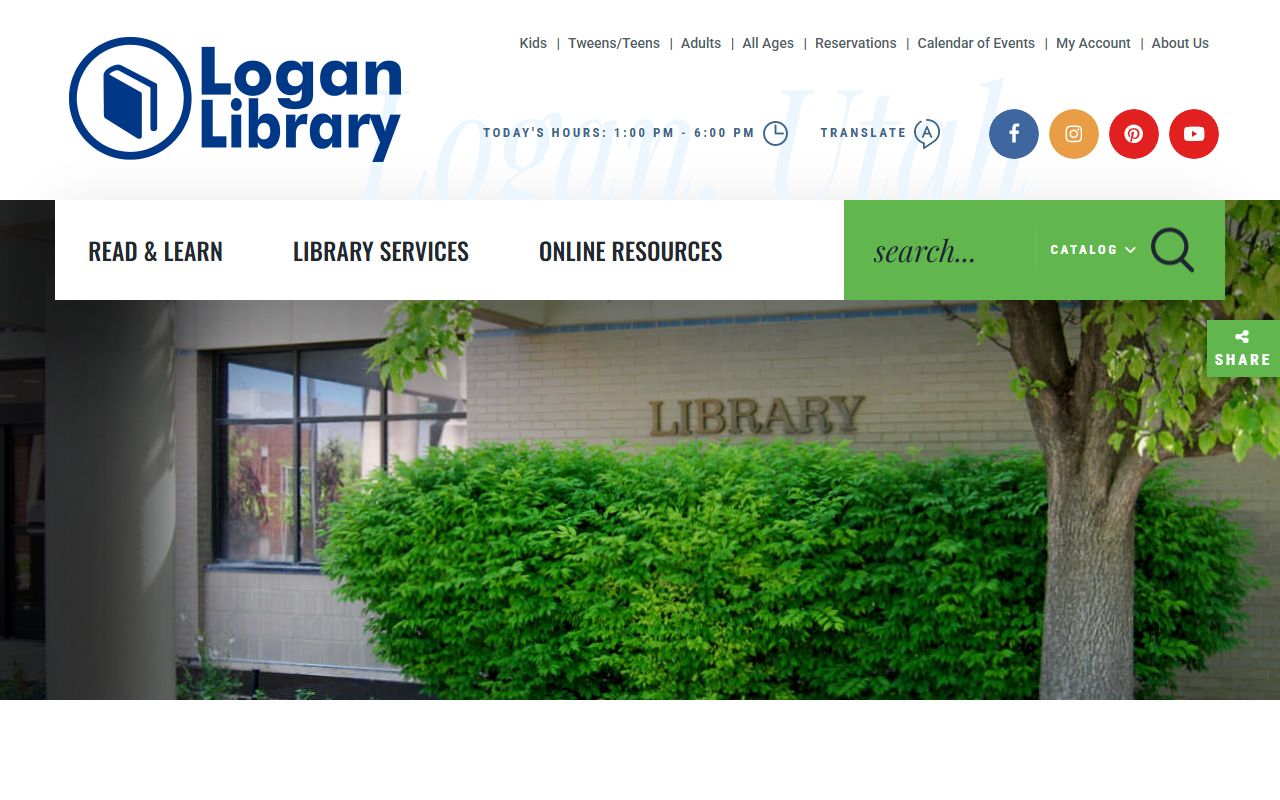
The local history image fits this search path because Logan Genealogy often advances fastest when the city record and the library context are read together.
The library is especially helpful when a family appears in a city record but not in the first census, or when a neighborhood clue needs a map, a photograph, or a secondary history to make sense. Logan Genealogy benefits from that broader view because the city has enough surviving history to let a researcher move back and forth between official records and compiled local knowledge without losing the thread.
Logan Genealogy at the City Cemetery
The Logan City Cemetery is one of the strongest burial sources for Logan Genealogy because it preserves burials dating back to the 1860s. The cemetery office is at 1000 N 1200 E, Logan, UT 84341, and the phone number is 435-716-9102. Burial records can confirm a death date, but they can also show family groups, repeated surnames, and lot patterns that are easy to miss in a newspaper notice. In a city as old as Logan, the cemetery often serves as the best physical proof that a family was present in a particular part of the city at a particular time.
That burial detail is especially useful when a record is inconsistent. A death notice may give one date, the city recorder another, and the cemetery register the date that best fits the family trail. Logan Genealogy becomes more reliable once those pieces are compared. The cemetery also helps researchers tie the 1860s settlement era to later city and county records, which is often the key to building a multi-generation Logan family timeline.
Lead-in source: Logan City Cemetery.
| Office | Logan City Cemetery |
|---|---|
| Address | 1000 N 1200 E Logan, UT 84341 |
| Phone | 435-716-9102 |
| Records | Burial records dating to the 1860s |
Logan Genealogy in Cache County Records
Cache County is the next layer for Logan Genealogy because the city sits at the county seat and the county record trail has been centered there for generations. The Cache County Genealogy page is the natural next stop when a Logan clue needs marriage, land, probate, or county-administration context. County records often explain what the city record only hints at. A marriage may identify a spouse, a land transfer may identify an heir, or a probate file may show the family structure behind a Logan address.
That county view matters because Logan families often appear across multiple record sets at once. A household can show up in the city recorder, the cemetery, a county deed, and a university archive entry all within a few years of each other. Logan Genealogy gets easier when those records are read as one trail rather than separate searches. Cache County also gives you the broader civil context that the city recorder does not have to preserve, especially for families moving between farm ground, the city core, and surrounding settlements.
Cache County's long settlement history and Logan's county-seat role make the county record set especially important for families who were in the area before the recorder's early vital window begins. When the city source is thin, the county source usually fills the gap.
Logan Genealogy in Utah State Collections
State collections widen the Logan Genealogy search beyond local repositories. The Utah State Archives can help with government and court context, Utah State History adds place and cemetery background, and Utah Vital Records is the state route for modern certificates. The FamilySearch Utah Genealogy wiki can help sort the record groups, while the Library of Congress Utah local history guide and the Utah Population Database provide broader research context.
Those state tools matter because Logan's early families often appear in more than one repository before they appear in a single statewide index. A burial, a city record, and a local history item may all point to the same household, but each one answers a different question. Logan Genealogy is stronger when the state sources are used to confirm, widen, and connect the city and county findings rather than replace them.
Lead-in source: Utah State Archives.
The archive image works well here because Logan Genealogy often needs a government-context source to bridge the city and county record sets.
Logan Genealogy Newspapers and Neighborhood Clues
Utah Digital Newspapers adds the detail that official records usually leave out. For Logan Genealogy, obituaries, funeral notices, business ads, ward notes, school items, and neighborhood references can reveal family links, dates, and addresses that never appear in a recorder file. Newspapers are especially useful when the city and county records are close but not identical. They can confirm whether two similar names belong to the same household or point to a burial place that the city records do not explain.
Newspapers also help interpret Logan as a community rather than just a record set. A family may show up in local news because of a school event, a church item, a move, or a death notice that names relatives. When those newspaper clues are compared with the recorder, the cemetery, and Cache County records, Logan Genealogy becomes much easier to trust because the same family appears in several independent sources.
Lead-in source: Utah Digital Newspapers.
The newspaper image is a good fit because Logan families often left repeated local references in the press across multiple decades.
Logan Genealogy Research Path
The most efficient Logan Genealogy workflow starts with the city recorder when the event falls inside the 1890 to 1905 city window, then moves to the local history library for compiled context, then to the city cemetery for burial proof. After that, Cache County records and Utah state collections fill in the civil and historical details the city does not preserve. That order keeps the search tied to the actual record history of Logan instead of a generic city lookup.
Logan is one of the better Utah cities for layered family-history work because the record trail is old enough to overlap across offices and source types. Once those sources are read together, Logan Genealogy becomes a timeline, not a guess. The city, county, and state layers all contribute something different, and the strongest conclusions usually come from comparing all three before deciding a line is complete.