
Weber County, Utah Genealogy
Weber County Genealogy begins with one of Utah's original counties, created on March 3, 1850, and centered in Ogden. The county was named after John Henry Weber, a trapper, which gives the county a strong early frontier identity. For family research, the useful part is the record pattern: marriages from 1887, birth and death registers from 1898 to 1905, probate and court records from 1850, and land records from 1850. That combination makes Weber County a major source for tracing Ogden families, railroad-era households, and property trails that stretch from the county's territorial beginning into the modern period.
Weber County Genealogy Offices
The Weber County Clerk/Auditor is the first stop for many Weber County Genealogy searches. The clerk maintains marriage records from 1887 to the present, birth and death records from 1898 to 1905, and probate and court records from 1850. The office is located at 2380 Washington Blvd, Suite 320, Ogden, UT 84401, the phone number is 801-399-8400, and the office is open Monday through Friday from 8:00 AM to 5:00 PM. Those dates make the clerk especially useful when a family event falls in the late territorial or early state period and you need the county's own record before moving elsewhere.
The Weber County Recorder handles the land side of Weber County Genealogy. The recorder maintains land records from 1850 to the present and provides online document search and access to property records. The office is also located at 2380 Washington Blvd, Suite 320, Ogden, UT 84401, and the phone number is 801-399-8400. In a county with a long urban and industrial history, the recorder often supplies the deed, mortgage, plat, survey, or historical land record that turns a surname into a location and a residence pattern.
Weber County Genealogy Records And Ogden Context
Weber County Genealogy is easier to manage when you keep the county's original status in mind. Because Weber County was one of Utah's original counties, the county has a long territorial record base that can be tied to Ogden as the county seat. That makes the county particularly valuable when a family line begins early and stays in the same general area for decades. A probate file may identify heirs. A court record may explain an estate issue. A land transfer may show whether a family stayed in Ogden, moved to another part of the county, or passed property to the next generation. The county's record run is deep enough that the same family can often be followed through multiple life events without leaving the county.
Ogden matters because it is not just the administrative center; it is part of the historical fabric of the county's record trail. Weber County Genealogy often crosses railroad, urban, and property history, so the county seat gives the search a stable anchor while the recorder's land trail adds the physical location. If a marriage entry, a probate packet, and a land transfer all point to the same household, the county's original-county status helps keep the record sequence coherent. That is especially important when the same surname appears in multiple city or neighborhood contexts around Ogden.
The county's land history is especially significant because the recorder's office includes deeds, mortgages, plats, surveys, and historical land records. In an original county with a major city seat, that matters a great deal. A property transfer can show a family residence. A plat can place a family on a specific subdivision or town lot. A mortgage or survey can add the missing detail that turns a family name into a place on the map. When those records are combined with the clerk's marriage and probate work, Weber County Genealogy becomes one of the most complete county-level searches available in northern Utah.
Weber County Genealogy In State Sources
Because Weber County has no successful local manifest image in this batch, the county benefits from state-level context to fill out the research path. Utah State Archives is useful when the county record needs broader government context or preservation history. In a county with an 1850 start, the archives can help explain how the record series was preserved and where related material may have been indexed.
Lead-in source: Utah State Archives.
The archives image is a useful anchor for Weber County Genealogy because the county's earliest probate and court work often benefits from a broader archival framework.
Utah State History helps place Weber County inside the broader settlement and industrial story of northern Utah. That matters because Ogden's role as county seat and the county's early frontier name are both part of the local history story. If a family line appears in territorial land or probate before it appears in a marriage register, the history context can help explain why the sequence looks that way.
Lead-in source: Utah State History.
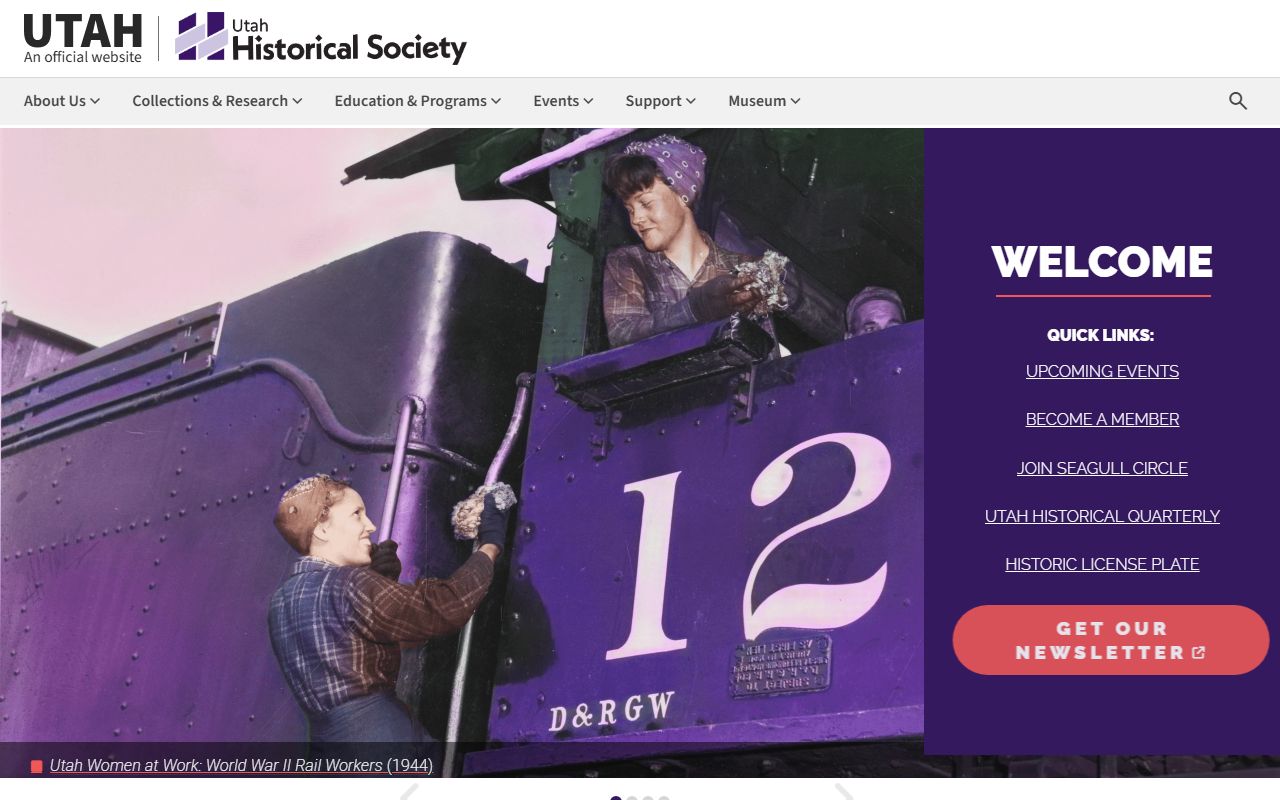
The history image fits Weber County Genealogy because the county's original status and Ogden-centered development are part of the reason the record trail is so deep.
Utah Digital Newspapers is another key source for Weber County Genealogy. Obituaries, marriage notices, court reports, and local items can show spouses, children, occupations, and residence clues that are easy to miss in a county register. In a county as populous and layered as Weber, newspaper evidence often helps distinguish one Ogden family from another when the surname is common or repeated across generations.
Lead-in source: Utah Digital Newspapers.

The newspaper image is useful here because Weber County Genealogy frequently needs local notice evidence to connect a county record to the next generation.
Utah Population Database can add still more context when a family line crosses institutions, counties, or health-related records over time. In Weber County Genealogy, that broader data is most useful after the county-level evidence is already in place and you want to see whether the family pattern fits a larger Utah move or settlement history.
Lead-in source: Utah Population Database.
The UPDB image is a good fit for Weber County Genealogy because the county's size and population history make broader pattern analysis especially useful.
FamilySearch Weber County Genealogy is a planning tool rather than a replacement for the county records. It points you toward the types of records that should exist in Weber County, and that can help you decide whether to start with the clerk, recorder, or a state resource when you already know the family name but not the exact record type.
Weber County Genealogy Research Strategy
The best Weber County Genealogy workflow starts with the event date and the right office. Use the clerk for marriages, probate, court, and early vital records. Use the recorder for land, deeds, mortgages, plats, and surveys. If the event falls within the county's early register window, the clerk is usually the right first stop. If it is later, state-level resources become more important. That sequence keeps the search tied to the proper period and avoids a common research error.
It also helps to keep Ogden in view. Because the county seat has been central since 1850, many records converge there even when the family lived elsewhere in the county. A property transfer can show movement across the county. A probate packet can identify heirs. A newspaper item can confirm a household name or a marriage. When those pieces line up, Weber County Genealogy becomes much easier to document because the county's record trail is both long and richly layered.
For families that appear in the FamilySearch county summary, the county becomes even more useful. The marriage, probate, and land record runs are broad enough that one county can answer a surprising amount of the family story. The key is to treat the clerk, recorder, archives, newspapers, and population data as a linked system rather than as separate stops. Once you do that, Weber County Genealogy becomes a dependable source for northern Utah family history.