
Brigham City Genealogy Sources
Brigham City Genealogy works well because the city has early settlement roots, a strong record office, a cemetery with pioneer-era burials, and a local history library that reaches beyond the city desk. Brigham City was settled in 1851 and incorporated in 1867, so the city recorder preserves historical city records that help place families in the civic timeline. The cemetery reaches back to the 1850s, and Box Elder County adds marriage, land, probate, and broader county history. That mix gives researchers several ways to build the same family line without relying on one narrow index.
Brigham City Genealogy at the City Recorder
The Brigham City Recorder maintains historical city records including ordinances, resolutions, and meeting minutes. That makes the office a useful starting point for Brigham City Genealogy when you need to understand how a family fit into the city at a particular time or when a local government action affected property, streets, or civic life. The office is located at 20 S Main Street, Brigham City, UT 84302, and the phone number is 435-734-6622. Because the city was incorporated in 1867, the recorder is especially helpful for later nineteenth-century and twentieth-century municipal records.
The recorder is not the whole story, but it is a solid anchor. When a family appears in a city minute, a land action, or a later civic note, the recorder can place that household inside Brigham City with more certainty than a name index alone. Brigham City Genealogy gets stronger when that city evidence is paired with cemetery and county records that cover the earlier generations.
Brigham City Genealogy at the Cemetery
The Brigham City Cemetery is a key burial source for Brigham City Genealogy because it preserves burial records dating back to the 1850s. The cemetery office is located at 300 E 600 S, Brigham City, UT 84302, and the phone number is 435-734-6622. Burial records can confirm a death date, a spouse, or a family cluster that is easy to miss in a city office or newspaper item. For pioneer families, the cemetery can be the most direct link between a known household and the ground where that family was buried.
Burial records often do more than identify one person. They can show neighbors, relatives, and repeated surnames in nearby plots. That kind of evidence is useful when Brigham City Genealogy needs to separate one branch of a family from another. A cemetery record can also lead you back to a marriage or county deed that explains how the family was connected before the burial took place.
Brigham City Genealogy in Box Elder County
Box Elder County is the wider frame for Brigham City Genealogy, and the county page is the best place to see the clerk, recorder, and related record paths together. The Box Elder County Genealogy page can help when a family line moves between the city and the broader county. Box Elder County also offers an online Marriage License Search covering marriages from 1886 to the present, which is a strong first step when you only know a surname and a rough year.
County records matter because the city sits inside a longer Box Elder County history. A marriage, probate file, or property record may appear before the city office ever shows a household clearly. In Brigham City Genealogy, that county layer often provides the first reliable bridge between a pioneer settlement and a later city family.
Lead-in source: Box Elder County Marriage License Search.
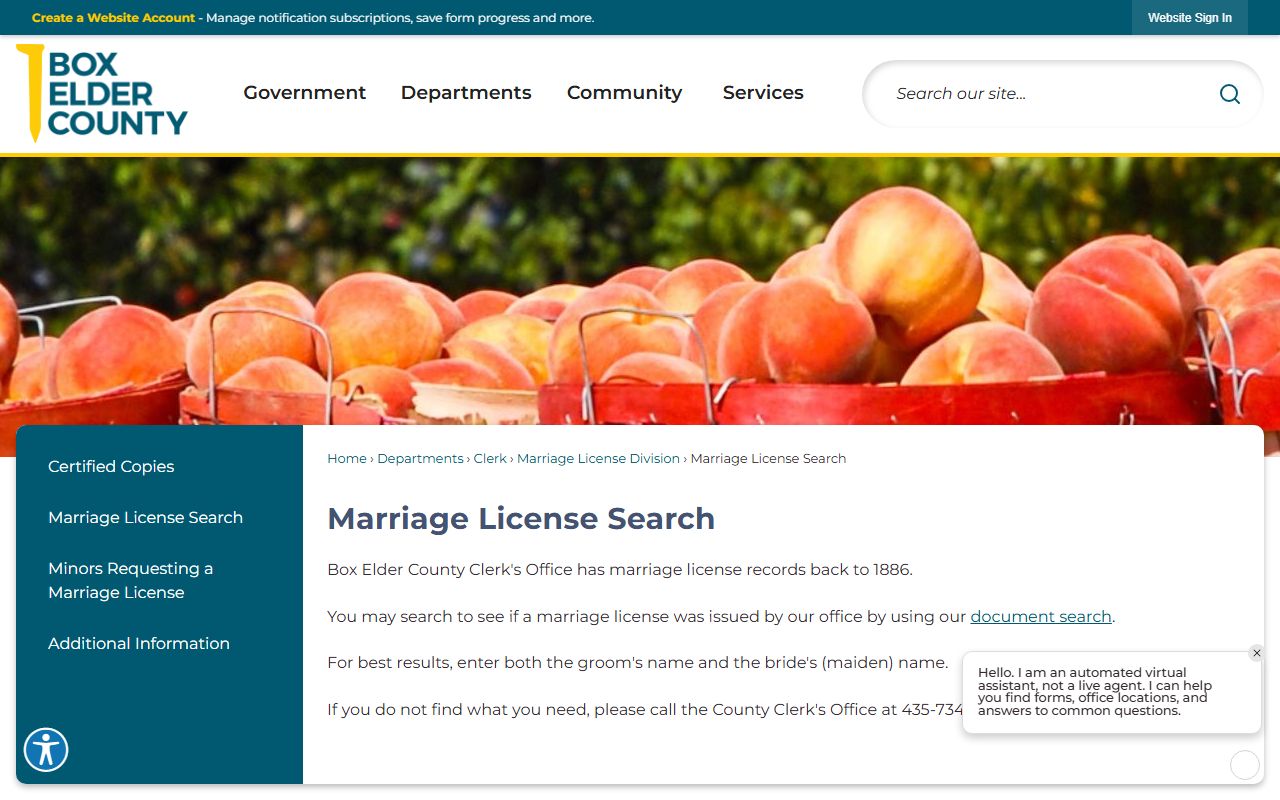
The marriage search image is a practical fit because Box Elder County marriages from 1886 forward often connect the Brigham City household to the next record you need.
Brigham City Genealogy at the Local History Library
The Brigham City Library local history research page is one of the best research companions for Brigham City Genealogy because it points to Box Elder County Recorder historical property records, Utah Digital Newspapers, historic walking tours, and Compton Studio photographs from 1884 to 1994. That mix is helpful because it brings together local history, visual evidence, and record access in a single place. When the city recorder gives you the formal civic trail, the library helps you see the people and places that sat around it.
Lead-in source: Brigham City Library Local History.
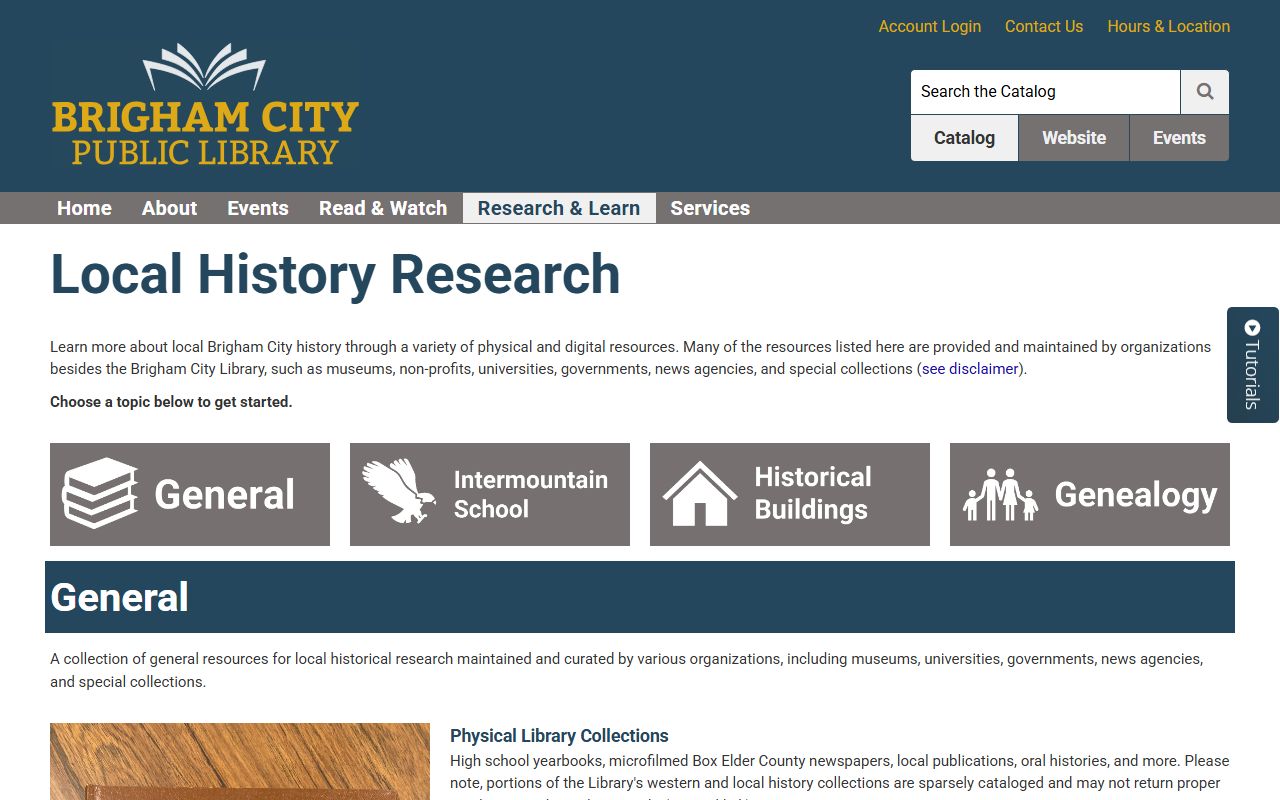
This local image is a strong fit because the library's history tools reach into county property records, newspapers, and photographs that deepen Brigham City Genealogy.
That combination is especially useful when a family is hard to place in a simple office search. A property record can show where the family lived. A newspaper item can show what happened next. A photograph can show the street or building where the family was seen. Brigham City Genealogy becomes much more vivid when those sources are read together.
Brigham City Genealogy and State Sources
State resources round out Brigham City Genealogy. The Utah State Archives can add court and government context, Utah State History can help with local history and cemetery background, and Utah Vital Records is the statewide route for modern certificates. The FamilySearch Box Elder County Genealogy page can help you sort the county record groups before you request copies or visit an office, and the Library of Congress Utah local history guide is useful when you need a broader research map.
State collections matter because they fill in the gaps that city and county records leave behind. A family may have a city burial entry, a county marriage, and a state certificate that all point to the same line. That is exactly the kind of layered evidence that makes Brigham City Genealogy reliable rather than scattered.
Brigham City Genealogy Newspapers and Burials
Utah Digital Newspapers is a valuable companion to Brigham City Genealogy because newspapers preserve obituaries, family notices, school items, business references, and local events that city and county records may never state in full. A short notice can identify a spouse, a residence, or a surviving child. That clue can then be matched to the cemetery or county marriage search, which makes the whole line easier to prove.
The Utah Cemeteries and Burials Database is useful as a second burial check when you want to compare a city cemetery record with the broader Utah burial trail. Brigham City Genealogy often gets clearer when the cemetery, newspaper, and county marriage evidence are checked together. A name that looks ordinary on its own can become much more specific once those three sources line up.
Brigham City Genealogy Research Path
The best Brigham City Genealogy workflow starts with the city recorder for ordinances, resolutions, and minutes, then moves to the cemetery for burial records from the 1850s. After that, the Box Elder County marriage search, the county page, and the local history library can fill in the family movement, property, and newspaper details that turn one clue into a documented household. That order matches the way the records were created and helps keep the research from jumping too quickly to state sources.
Once the city, county, library, and state layers are compared, Brigham City Genealogy becomes a full local history search rather than a simple name lookup. That is the most dependable way to trace a Box Elder County family from settlement into the city era.