
Orem Genealogy Sources
Orem Genealogy usually begins with the city recorder and the public library, then expands into Utah County and statewide collections. Orem was incorporated in 1919, so the city record trail is relatively modern compared with older Utah settlements, but it is still useful for local civic history and later family research. The city recorder maintains records from incorporation to the present, while the public library offers a dedicated genealogy collection, online databases, local history collections, and research assistance. If you are tracing a family in Orem, the best results often come from combining the recorder's official record trail with the library's local-history tools and then checking county or state sources for earlier family context.
Orem Genealogy at the City Recorder
The Orem City Recorder is the official start for Orem Genealogy when you need city records from incorporation forward. That means ordinances, resolutions, meeting records, and other municipal material that can explain how a family interacted with local government or how a neighborhood developed over time. Because Orem is a younger city than many Utah settlements, the recorder is more about modern civic history than pioneer-era genealogy, but it is still an important anchor for later family research.
The office is at 56 N State Street, Orem, UT 84057, and the phone number is 801-724-6900. The recorder's record set is useful when a family appears in a home, subdivision, or civic issue tied to Orem after incorporation. In Orem Genealogy, that official city layer can help you separate a local event from the broader Utah County story and keep the chronology accurate.
| Office | Orem City Recorder |
|---|---|
| Address | 56 N State Street Orem, UT 84057 |
| Phone | 801-724-6900 |
| Records | City records from incorporation to the present |
Orem Genealogy at the Public Library
The Orem Public Library is an especially useful partner for Orem Genealogy because it offers a dedicated genealogy collection, online databases, local history collections, and research assistance. That mix makes it a good place to sort out a surname before you commit to county or state research. The library can help you move from a broad family name to a city address, a newspaper mention, or a compiled family note that gives the rest of the search direction.
Local history collections matter in a city like Orem because families often lived in the same general area long before a modern subdivision appeared. A library source can connect a family to a school, church, business, or neighborhood history that the city recorder would never hold. Orem Genealogy benefits from that kind of evidence because it turns the search from a simple name lookup into a place-based reconstruction of a household.
Lead-in source: Utah State History.

The library side of Orem Genealogy pairs naturally with state historical collections that help explain how the city fit into the wider Utah County setting.
Orem Genealogy in Utah County Records
Because Orem was incorporated in 1919, county records are still important for family history that stretches before the city record set or outside the city office. Utah County materials can preserve land, probate, marriage, and other civil evidence that helps place a family before Orem became a formal city. If you are working on a long family line, county records may be the only place where the earlier generations appear in a consistent way.
That county layer also helps explain movement within the county. A family may show up in a nearby settlement, move into the Orem area, and then appear in the city recorder only after incorporation. Orem Genealogy is easier when you read those movements in sequence. The county context lets you see the family before the city did, and the city record then picks up the later story with better precision.
Orem Genealogy in State Collections
State collections fill the gaps when Orem Genealogy needs more than a city recorder or library can provide. The Utah State Archives can help with government and court context, Utah State History provides place research, and Utah Vital Records is the state path for modern certificate access. The CDC Utah vital records page can help you confirm the state-level framework, and the Library of Congress Utah local history guide points you toward additional local-history methods.
When you need broader context for families living in Orem, the Utah Population Database can be a useful research reference, especially if you are trying to understand long-term family movement or demographic context. Those tools work best when you already know the approximate period and want to widen the search beyond the city level. Orem Genealogy is often strongest when the city, county, and state sources are read together.
Lead-in source: Utah Vital Records.
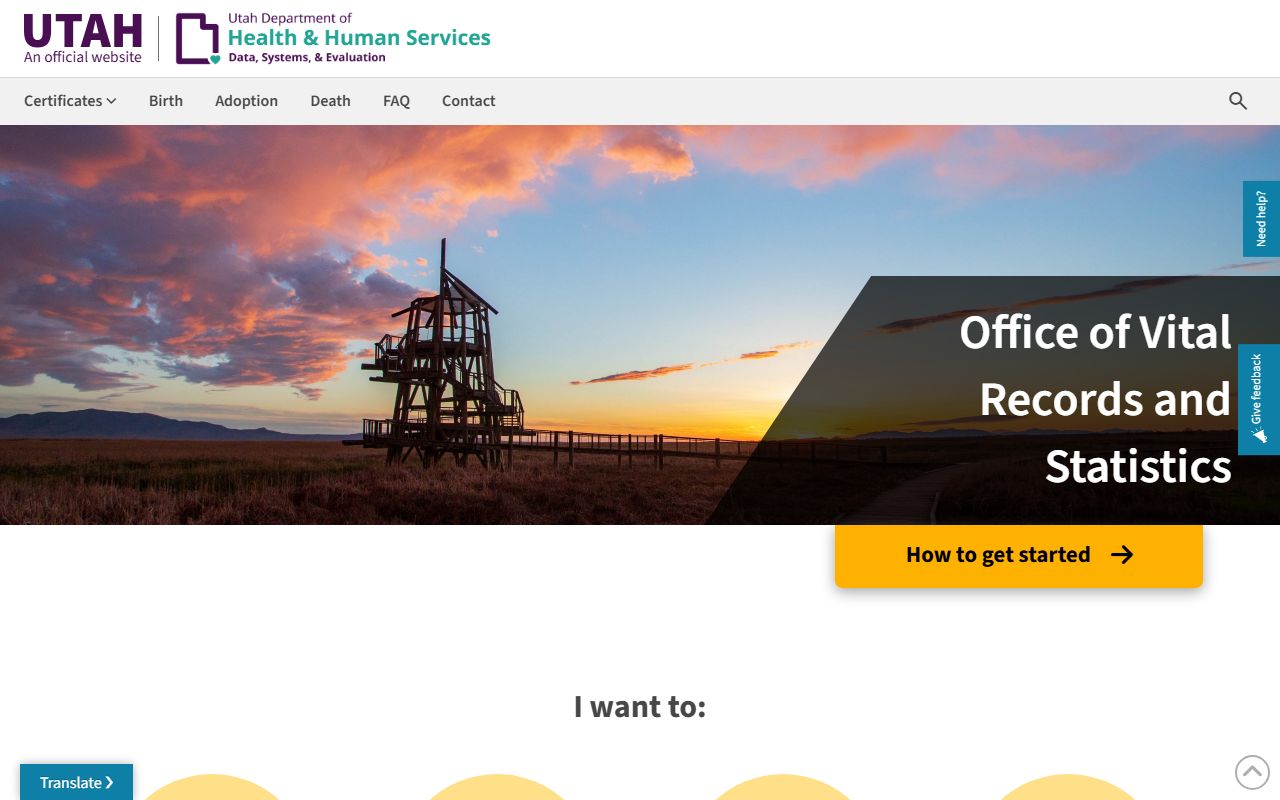
That state-level certificate path is useful when a city or library clue points to a modern family event that needs formal confirmation.
Orem Genealogy Newspapers and Burials
Utah Digital Newspapers gives Orem Genealogy another layer of detail by capturing obituaries, local events, business notices, and neighborhood items. Newspapers are often the fastest way to connect a city record to a household name because they show how a family was described at the time rather than only where it appears in an index. If you need a spouse's name, a move, or a burial clue, the newspaper trail can be more revealing than the civil record.
Burial sources matter too, even in a younger city. They can confirm a death place, identify a cemetery, or connect an Orem resident to a family plot in another part of Utah County. Orem Genealogy works best when those burial clues are compared with the recorder, the library, and the newspaper trail so that each source confirms the others rather than standing alone.
Lead-in source: Utah Cemeteries and Burials.

The newspaper collection is a practical way to turn a surname into a story when the city record set is still too narrow.
Orem Genealogy Research Path
The cleanest Orem Genealogy workflow starts with the city recorder for modern municipal records, moves to the public library for local history and research help, and then expands into Utah County and state collections for earlier evidence. That sequence matches the city's history and keeps the search from jumping too quickly into records that are too broad or too recent for the question you are trying to answer.
Orem's value for genealogy is that it gives you both a city-level record set and a strong library environment in one place. When those are paired with county and state resources, the family trail becomes much easier to verify and much harder to misread.