
Roy Genealogy Sources
Roy Genealogy is shaped by a city that incorporated in 1937, which means the city recorder is useful for municipal records from incorporation to the present but not for the earlier settlement history of the area. That makes Roy a county-and-state research city more than a city-office-only search. The city sits in Weber County, so the older family trail often lives in county records, newspapers, cemetery sources, and statewide collections. If the event is after 1937, the city recorder can help quickly. If the family was in the area before incorporation, the county and state layers are where the useful evidence usually begins.
Roy Genealogy at the City Recorder
The Roy City Recorder maintains city records from incorporation to the present. That makes the office the first municipal stop when a family event or property question falls inside Roy's incorporated era. The recorder's office is at 5051 S 1900 W, Roy, UT 84067, and the phone number is 801-774-1000. For Roy Genealogy, the recorder is valuable because it preserves the city-side paper trail that begins in 1937 and helps anchor later family history in the municipal record set.
Lead-in source: Roy City Recorder.
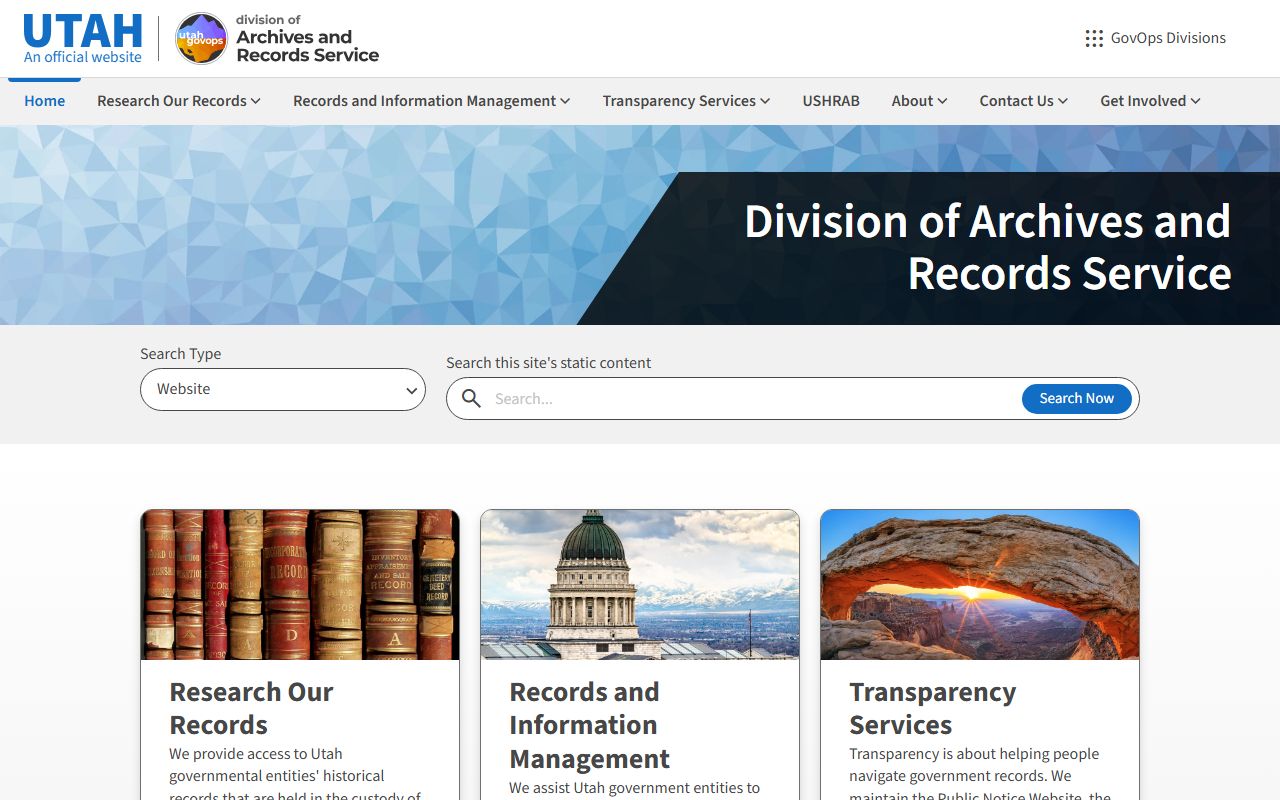
The state archives image is a good fit because Roy often needs a broader record trail to connect the city office to earlier family evidence.
| Office | Roy City Recorder |
|---|---|
| Address | 5051 S 1900 W Roy, UT 84067 |
| Phone | 801-774-1000 |
| Records | City records from incorporation to the present |
Roy Genealogy in Weber County Records
Weber County records are the older framework for Roy Genealogy because the city did not exist as a separate municipality until 1937. Families who were in the area before incorporation are more likely to appear in county marriage, land, probate, and civil records than in city files. That county trail matters because Roy's modern record set sits on top of an earlier county landscape. If a surname appears before the city recorder's useful range, the county record set is usually where the first household proof appears.
Weber County records also help explain geography. A family may be described by a farm, road, district, or neighboring place before Roy became the city name used in later records. Roy Genealogy becomes easier when those county references are treated as the earlier layer of the same story rather than as separate searches. The county is often what gives the household its earliest fixed point for residence or ownership.
That county detail matters in Roy because older references can be spread across unincorporated place names, nearby town descriptions, and later city labels. A single family may move through several versions of the same geography as roads are improved and subdivisions are built. County records keep those transitions legible. Roy Genealogy is stronger when the county trail is used to map that progression instead of forcing every early clue into the 1937-and-later city record set.
Roy research is strongest when the county evidence is used to bridge the pre-1937 period and the city recorder is used for the later municipal period.
Roy Genealogy in State Collections
State collections help Roy Genealogy connect the city and county layers. The Utah State Archives can add government and court context, Utah State History provides place-history reference, and Utah Vital Records is the state route for modern certificates. The FamilySearch Utah Genealogy wiki can help sort the record groups, and the Utah Population Database can add broader family-context clues when a line needs more than one record.
Lead-in source: Utah State History.

The historical society image works well because place history often explains how Roy grew out of the older Weber County landscape.
Those state collections matter because Roy families often appear in the county and newspaper trail before they appear in a city record. A burial notice or local-history item may connect the household to the same area in a way that makes the city record much easier to interpret.
Roy Genealogy Newspapers and Local Clues
Utah Digital Newspapers is especially useful for Roy Genealogy because newspapers preserve family details before a city record can. Obituaries, funeral notices, school items, business references, and community announcements can identify relatives, spouses, and addresses that do not show up in the recorder. In a city with a 1937 incorporation date, that newspaper trail is often the easiest way to locate earlier family history in plain sight.
Burial clues work the same way. A newspaper notice can name a cemetery, a surviving child, or a spouse, and that clue can lead back into county or city records. When Roy Genealogy is read through that combination of newspaper, county, and state evidence, the family history becomes much easier to document.
Lead-in source: Utah Digital Newspapers.

The newspaper image fits because Roy often needs notice-level evidence to bridge the county era and the city era.
Roy Genealogy Research Path
The most efficient Roy Genealogy workflow starts with the city recorder for post-1937 records, then moves into Weber County records for earlier civil and property evidence. After that, state collections and newspapers fill in the names, places, and dates that the city office cannot preserve. That sequence matches the actual record history of the city and keeps the search tied to the right repository for the date.
Roy is a modern city, but the family history around it is older than the incorporation date. Once the county and state layers are added, the city record set becomes much more useful and the household timeline becomes much clearer as a continuous story.
For Roy Genealogy, that final comparison is often where an older Weber County place name becomes a recognizable city family line.