
Garfield County, Utah Genealogy
Garfield County Genealogy starts with a county that was created on March 9, 1882, from Iron County and centered in Panguitch. The county name honors President James A. Garfield, so the local history is easy to place even before you open a record book. That is useful because Garfield County has a clean civil trail from the 1880s forward, with marriages, probate, court, and land records all beginning in the same broad era. When a family lived in Panguitch, farmed nearby, or left a marriage, property, or probate trail in the same county, the record set usually gives enough structure to build a practical timeline without jumping immediately to outside repositories.
Garfield County Genealogy Offices
The Garfield County Clerk is the first stop for many Garfield County Genealogy searches. The office keeps marriage records from 1882 to the present, birth and death records from 1898 to 1905, and probate, court, and land records from 1882 forward. It is located at 55 S Main Street in Panguitch, UT 84759, the phone number is 435-676-1103, and the office is open Monday through Friday from 8:00 AM to 5:00 PM. Those dates make the clerk the most direct source when a family event falls inside the county's earliest settlement years and you want to know whether the event was entered locally or later copied into another system.
The Garfield County Recorder handles the property side of Garfield County Genealogy. The office maintains land records from 1882 to the present and provides access to recorded documents and property information from the same Panguitch address. The recorder phone number is 435-676-8826, and the weekday hours match the clerk. In a county where ranching, town lots, and family transfers can all matter, the recorder is the place that often turns a family name into a location, a parcel, or an inheritance trail.
Lead-in source: Garfield County.
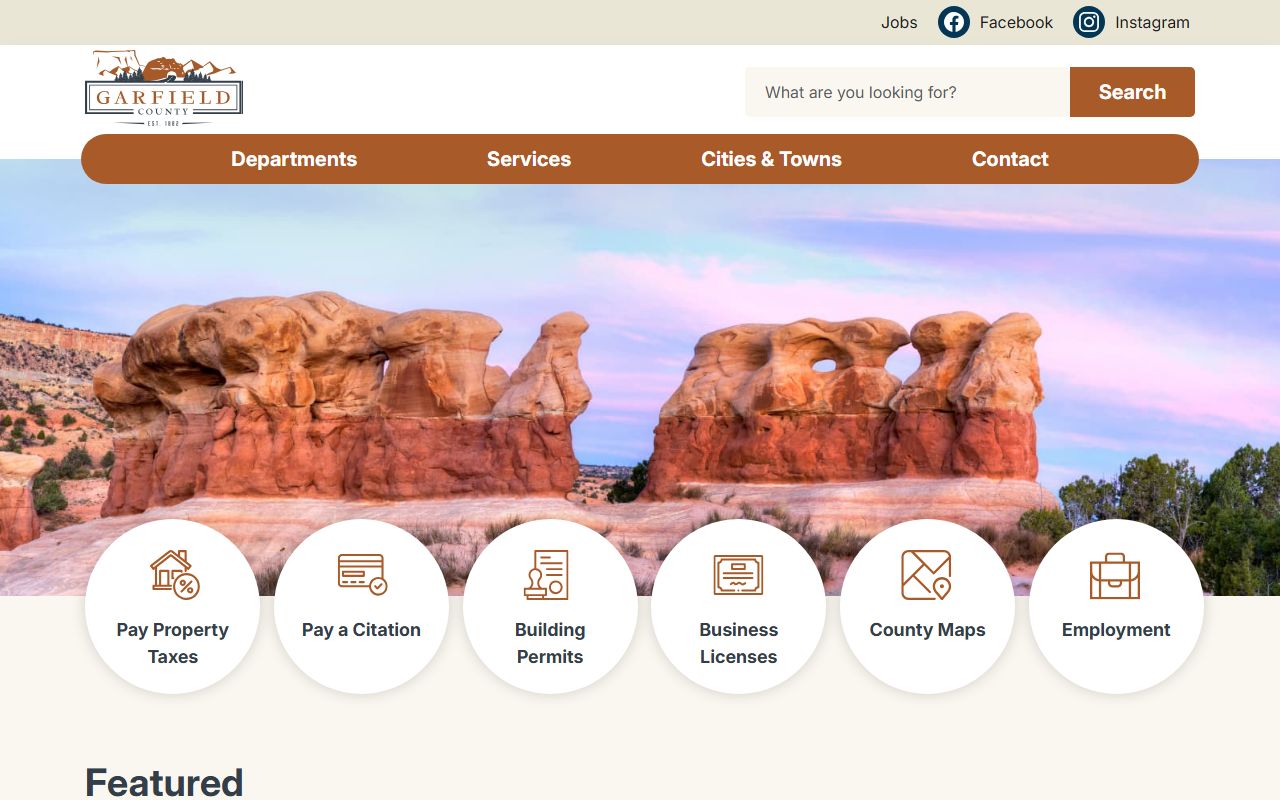
The county home page is a useful visual anchor because it shows the local government setting where Garfield County Genealogy records are administered. When you are comparing office names, addresses, and hours, that simple visual reminder helps keep the search tied to Panguitch rather than to a broader Utah assumption.
Garfield County Genealogy Records
Garfield County Genealogy works best when you read the record groups in sequence. A marriage can show when two family branches came together. A birth or death entry can confirm a household member who may not appear clearly in a later census. A probate file can identify heirs and settle questions about who survived whom. A land record can show whether a family stayed in the county, moved to a new parcel, or passed property to the next generation. Because the county record run begins in the 1880s and continues through the twentieth century, the same family can often be followed across more than one office without leaving Garfield County.
The county's origin matters as much as the dates. Garfield County was carved from Iron County, which means families who appear before 1882 usually belong in the parent county record set or in broader Utah collections. Once Garfield County was created, Panguitch became the county seat and the local record trail became much easier to manage. That single county seat focus is a real advantage for researchers because it reduces the number of places a name can hide and gives the clerk, recorder, and later records a shared geographic center.
Garfield County is also a county where local history and civil records reinforce each other. If a surname shows up in a land transfer, you can often look for a matching marriage or probate clue in the same county. If a family appears in a later death notice, the earlier marriage or land record may be the piece that proves which household in Panguitch or the surrounding area you are actually tracing. The county is not huge, but the record structure is rich enough to reward a layered search.
Garfield County Genealogy Vital Records
For Garfield County Genealogy, the early vital record window is narrow but important. The county clerk holds birth and death records from 1898 to 1905, which means a family event in that span may still be waiting in the local office rather than at a state repository. That is a useful cutoff because it tells you exactly when to check Panguitch first and when to move into the state system for a later certificate. The county marriage run begins in 1882, so marriages can often be tracked more easily than births and deaths.
When a record falls outside the county's early window, Utah Vital Records becomes the next step, and the CDC Utah vital records page provides a concise overview of how the state handles modern requests. Utah Code Title 26 is helpful for understanding why some records sit with the county and others shift to the state level. The practical result is simple: Garfield County genealogy is smoother when you match the date to the correct office before you request anything.
That separation between county and state matters for proof as well as convenience. A county birth or death registration can be the bridge between a marriage notice and a later obituary, while a state certificate can confirm the same person after the county register ended. If you are trying to distinguish two people with similar names, the record jurisdiction can be as important as the date itself. In a county with a relatively short early vital span, that distinction can save a lot of time.
Garfield County Genealogy Newspapers
Utah Digital Newspapers is one of the best companions to Garfield County Genealogy because local notices often supply what the county books do not. Obituaries, marriage announcements, probate notices, land sales, and short community items can all show a family in motion. In a county seat community like Panguitch, a newspaper item may name relatives, mention a ranch location, or record an occupation that never appears in a clerk book. Those details help move from a single name to a fuller household story.
Utah State History and the Library of Congress Utah local history guide add the context that turns a county record into a family narrative. They help explain settlement patterns, local institutions, and the wider southern Utah setting that shaped Garfield County families. When a line begins in a newspaper item or a burial note, those broader sources can suggest why the family settled where it did and how the next generation likely moved through the county.
The county record set and the newspaper record work well together because they answer different parts of the same question. The clerk and recorder give you dates and property. Newspapers give you relationships, occupations, and neighborhood detail. For Garfield County Genealogy, that combination is often what makes a family branch confident enough to document rather than guess.
Garfield County Genealogy Strategy
Start Garfield County Genealogy with the year you already know and work outward from there. If you have a marriage, check the clerk and then look for land, probate, and later death material that may mention the same couple. If you have a land transfer, look for a marriage or probate file that explains why the property changed hands. If you have only a newspaper item, use the county office dates to decide whether the event belongs in the local books or in a statewide certificate system. That sequence keeps the search grounded and keeps you from chasing a record type that does not fit the period.
If the family appears before Garfield County existed, step back into Iron County and broader Utah collections before you try to force the name into a Garfield record set. That matters because county boundaries define where the original records were created, not just where the family later lived. Once Garfield County was formed, Panguitch became the practical center of the research trail, and the county seat should stay in view whenever you compare a marriage, a land transfer, and a later obituary.
Garfield County Genealogy is most productive when you treat the county as a connected record system rather than as isolated books. The clerk, recorder, newspapers, and state-level resources each cover a different part of the same family story. When those parts line up, the county becomes surprisingly easy to use for a place that began with a late territorial record run.