
Morgan County, Utah Genealogy
Morgan County Genealogy is shaped by a county that was created from Davis County in 1862, with Morgan as the county seat. The county was named after Jedediah Morgan Grant, which ties the place directly to early LDS settlement history. For researchers, the important part is the record span: probate, court, and land records begin in 1862, marriages begin in 1888, and birth and death registers cover 1898 to 1905. That combination gives Morgan County a usable civil trail for families who stayed in the county, moved through the Morgan Valley area, or left property and court evidence behind before county boundaries changed elsewhere.
Morgan County Genealogy Offices
The Morgan County Clerk is the starting point for many Morgan County Genealogy searches. The clerk maintains marriage records from 1888, birth and death records from 1898 to 1905, and probate, court, and land records from 1862. The office is at 48 W Young Street in Morgan, UT 84050, the phone number is 801-845-4002, and the office is open Monday through Friday from 8:00 AM to 5:00 PM. Those dates make the clerk useful not just for marriages, but for nearly any family event that falls inside the county's post-1862 record trail.
The Morgan County Recorder handles the land side of Morgan County Genealogy. The recorder preserves land records from 1862 to the present and provides access to recorded documents and property information. The phone number is 801-829-6811, and the weekday schedule matches the clerk. Even without a separate courthouse address in the research summary, the recorder remains a key source because Morgan County land files can show where a family settled, how property moved, and when a line of inheritance shifted between generations.
Lead-in source: Morgan County Clerk.
The clerk image is a useful starting point because most Morgan County Genealogy searches begin with a marriage, a probate question, or a birth and death inquiry that belongs in the clerk's office.
Lead-in source: Morgan County Recorder.
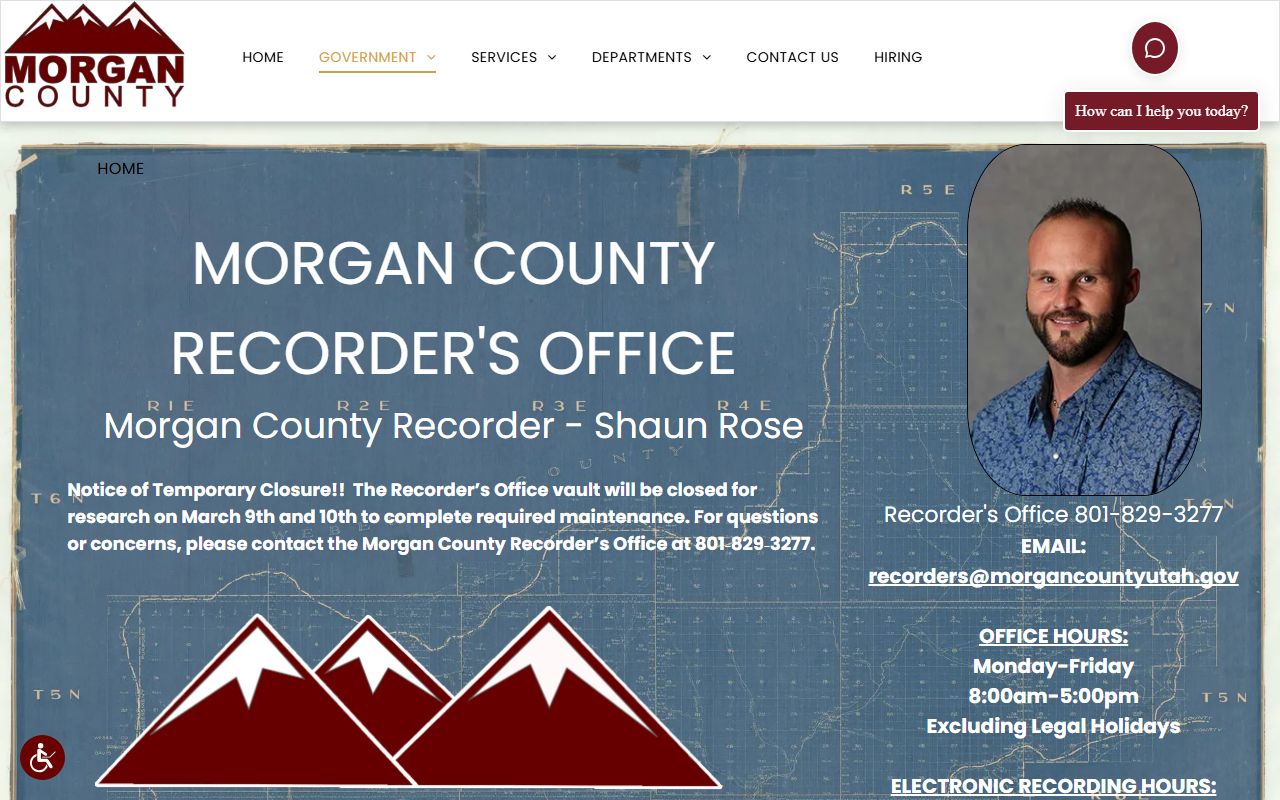
The recorder image shows the property side of Morgan County Genealogy, where deeds and land transfers often explain why a family remained in the county or moved to another parcel.
Lead-in source: Morgan County.
The county home page image is a helpful anchor because it ties the office trail back to Morgan itself, which is the practical center of the county record search.
Morgan County Genealogy Records And Parent County Context
Morgan County Genealogy works best when you keep the 1862 creation date in view. Because the county was carved out of Davis County, any family line that appears earlier belongs in the parent county or in broader Utah records before Morgan County existed. Once the county was organized, the civil record trail began to form around Morgan, and the clerk and recorder became the central places to look for marriages, land transfers, and probate work. That makes Morgan County especially useful when you already know a family stayed in one valley or moved through a relatively compact settlement area over several generations.
The county seat matters because it keeps the research focused. Morgan County is not one of Utah's biggest county record sets, but it is large enough to generate a meaningful paper trail. Probate records can identify heirs. Court records can show disputes or estate work. Land records can reveal whether a family held a farm, sold property, or passed land to the next generation. Since these records begin in 1862, they can also help bridge the gap between early settlement and later marriage records, which is important when family names repeat across generations.
Named after Jedediah Morgan Grant, the county carries a settlement-era identity that fits the records well. That name is not just historical decoration. It signals that local family history, religious history, and civil record history are intertwined. When Morgan County Genealogy seems thin at first, the historical background often explains why the same household appears first in land or probate rather than in a marriage register.
Morgan County Genealogy Vital Records And Newspapers
For later Morgan County Genealogy work, the birth and death registers from 1898 to 1905 may answer some questions, but many family events will move to the state certificate system. Utah Vital Records is the main state route for those later certificates, and the CDC Utah vital records page gives a quick overview of the modern process. Utah Code Title 26 helps explain why the county register stops where it does and why later requests belong with the state office instead of the county clerk.
Utah Digital Newspapers is also a valuable companion to Morgan County Genealogy. Obituaries, marriage announcements, community notices, and short references to land or probate work can help identify spouses, children, or residence details that are easy to miss in a county index. In a county with a compact record base, a newspaper item can supply the missing date or relationship that lets the rest of the search fall into place.
Utah State Archives and Utah State History add wider context when the county books need interpretation. Archives help with government and preservation context, while state history helps place Morgan County inside Utah's longer settlement pattern. Together they can show why a family moved the way it did and how that movement appears in the county record trail.
Morgan County Genealogy Research Strategy
The fastest Morgan County Genealogy workflow starts with the event date and the right office. Use the clerk for marriages, early vital records, probate, and court questions. Use the recorder for land and property. If the family event falls before 1862, step back into Davis County before trying to force it into Morgan County. That chronological discipline matters because the county boundary change defines the original record location, not just where the family later lived.
Once the county record is located, widen the search with newspapers and state collections. A land record can show where the family lived. A probate packet can show heirs. A newspaper item can confirm the wedding, death, or sale date. In Morgan County Genealogy, those sources work best together because the county's small-to-medium scale makes linked evidence easier to spot when you keep the sequence tight. The county seat, office locations, and parent-county history all point toward the same practical search method.
That method also helps when the surname is common. A marriage entry can narrow the line, the recorder can confirm the property, and a newspaper notice can confirm the same household in Morgan. Once those pieces agree, the county becomes much easier to use as a documented family source rather than a rough index of names.