
Rich County, Utah Genealogy
Rich County Genealogy starts with a county created from Cache County on January 16, 1868, with Randolph as the county seat. The county was named after Charles C. Rich, an LDS apostle and early settler, which gives the place a clear historical identity from the beginning. The county record trail is strong enough to support research from the late territorial period forward, with marriages from 1888, early birth and death registers from 1898 to 1905, and probate, court, and land records from 1868 onward. That makes Rich County especially useful for families who settled in Randolph or whose property, marriage, and probate evidence stayed in the county through the end of the nineteenth century and beyond.
Rich County Genealogy Offices
The Rich County Clerk is the first stop for many Rich County Genealogy searches. The clerk maintains marriage records from 1888, birth and death records from 1898 to 1905, and probate, court, and land records from 1868. The courthouse is at 20 S Main Street in Randolph, UT 84064, the phone number is 435-793-2415, and the office is open Monday through Friday from 8:00 AM to 5:00 PM. Those dates make the clerk the best place to start when a family line is already tied to Randolph or when you need a county record to bridge the gap between settlement-era history and later vital records.
The Rich County Recorder handles the property side of Rich County Genealogy. The office maintains land records from 1868 to the present and provides access to recorded documents and property information. It shares the same Randolph address and hours as the clerk. That shared setting matters because a land transfer, a marriage, and a probate file may all be part of the same family pattern, and Rich County is small enough that the recorder can often confirm where a household was located when the family record trail gets complicated.
Lead-in source: Rich County.
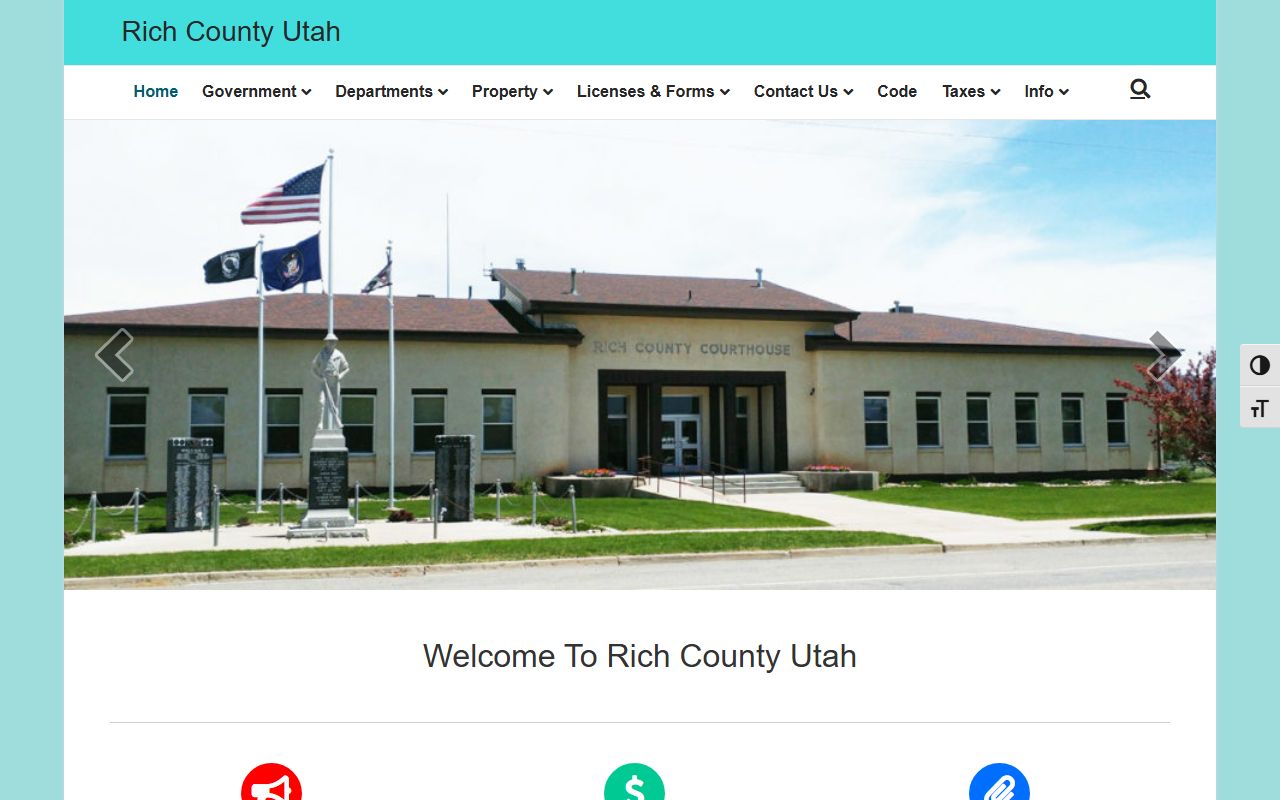
The county home page is a practical visual anchor because it keeps Randolph and the county government setting in view while you move between the clerk, recorder, and later state resources.
Rich County Genealogy Records And Randolph Context
Rich County Genealogy works best when you keep the 1868 creation date in focus. Because the county was carved from Cache County, any family record that predates the county belongs in the parent county or in broader Utah collections before Rich County existed. Once the county was created, Randolph became the center of the record trail, and the clerk and recorder began to anchor the local civil evidence. That makes Rich County especially useful for researchers tracing a surname that stayed in the same northern Utah area over several generations.
The county's record sequence is straightforward. Marriage records begin in 1888. Birth and death registers cover 1898 to 1905. Probate, court, and land records begin in 1868. Those date ranges are important because they tell you which office is most likely to hold the clue you need. A probate file can identify heirs. A court record can explain a dispute or an estate matter. A land file can show whether a family held, sold, or inherited property in Randolph or elsewhere in the county. The county's compact office structure means these records can often be compared more quickly than in larger counties.
Rich County Genealogy also carries the history of Charles C. Rich, whose name appears in the county itself. That is useful context because local genealogy often needs to recognize the historical setting as well as the household line. When a family appears first in property or probate rather than in a marriage book, the county's naming and settlement history can help explain why the record sequence looks that way.
Rich County Genealogy In State Sources
Utah State Archives is an important companion to Rich County Genealogy because the county's older record trail often makes sense only when it is placed in the wider government-record system. If a probate or court issue needs broader context, the archives can help show how the county materials fit into Utah's preservation history.
Utah State History helps place Rich County inside the larger settlement story of northern Utah. That matters because the county's name, its creation date, and its county seat all reflect an early territorial pattern that shaped how families moved and where they left records. If you are trying to understand why a household appears in Randolph property records before it shows up in a marriage entry, the state history context can help.
Utah Digital Newspapers adds the family details that county books often leave out. Obituaries, marriages, local notices, and short items about land or community activity can confirm relationships, dates, and residence clues. In Rich County Genealogy, a newspaper item can be the piece that turns a partial probate or land record into a complete household story.
Utah Vital Records, the CDC Utah vital records page, and Utah Code Title 26 help with later certificates and with understanding the county-to-state record divide. That framework matters because Rich County's early registers cover only part of the family timeline, and later events belong to the state system instead of the courthouse.
Rich County Genealogy Vital Records And Newspapers
Rich County Genealogy for births and deaths begins with the county clerk's early register from 1898 to 1905. Those years can answer a lot of questions when the event falls inside the county window, but many later family events will need Utah Vital Records instead. The state route is useful when you already know the family stayed in Rich County but the birth or death happened after the local register period. That way you can keep the county books for context while still using the correct certificate system for the later event.
Newspapers often make the rest of the story easier. A marriage announcement can identify a spouse. A death notice can narrow the certificate search. A property item can show how long a family stayed in the county or which member inherited a parcel. In a county like Rich, where the office trail is compact but the family story can still span generations, the newspaper trail can be as important as the clerk's record. A single item may supply the one extra fact needed to separate one Randolph family from another.
The practical effect is simple. If the county record is early, use the clerk. If the family event is later, use the state. Then use newspapers to connect the two. That sequence is usually the fastest way to turn a county entry into a confident genealogy match.
Rich County Genealogy Research Strategy
Start Rich County Genealogy with the date you know and work toward the right record type. Use the clerk for marriage, probate, court, and early vital records. Use the recorder for land and property. If the event predates 1868, move back to Cache County before you treat Rich County as the source. That is the cleanest way to avoid forcing an earlier family line into a county that did not yet exist.
Once you have the local record, widen the search with state archives, state history, and newspapers. That combination is especially effective in a county like Rich because the record trail is concentrated enough that one document can lead to the next. A marriage can lead to a land file. A land file can lead to a probate packet. A newspaper item can confirm the same household in Randolph. The more the sources agree, the stronger the family reconstruction becomes.
Rich County Genealogy becomes most useful when the county seat, the creation date, and the office ranges are all kept in the same view. The county may be small, but the records are still layered. If you treat them as a linked trail rather than isolated books, the county becomes a dependable source for documenting a northern Utah family line.