
Wayne County, Utah Genealogy
Wayne County Genealogy begins with a county created from Piute County on March 10, 1892, and centered in Loa. The county was named after Wayne Robinson, son of State Senator Robinson, which gives the county a distinct late territorial identity that is easy to place in the record trail. For family research, the useful part is the record pattern: marriages from 1892, birth and death registers from 1898 to 1905, and probate, court, and land records from 1892 forward. That makes Wayne County a practical place to trace families who settled in Loa or in the smaller communities across the county's mountain and valley landscape.
Wayne County Genealogy Offices
The Wayne County Clerk is the first stop for many Wayne County Genealogy searches. The clerk maintains marriage records from 1892 to the present, birth and death records from 1898 to 1905, and probate, court, and land records from 1892. The courthouse is located at 18 S Main Street in Loa, UT 84747, the phone number is 435-836-1301, and the office is open Monday through Friday from 8:00 AM to 5:00 PM. Those dates make the clerk the county's central civil-record source when a family event falls in the county's first years and you need the county's own record before moving to a state office.
The Wayne County Recorder handles the property side of Wayne County Genealogy. The recorder maintains land records from 1892 to the present and provides access to recorded documents and property information. The recorder phone number is 435-836-1303, and the office shares the same Loa address as the clerk. In a county formed so late in the territorial period, the recorder often supplies the property trail that explains how a family stayed in Loa or moved through the county's land network.
Lead-in source: Wayne County.
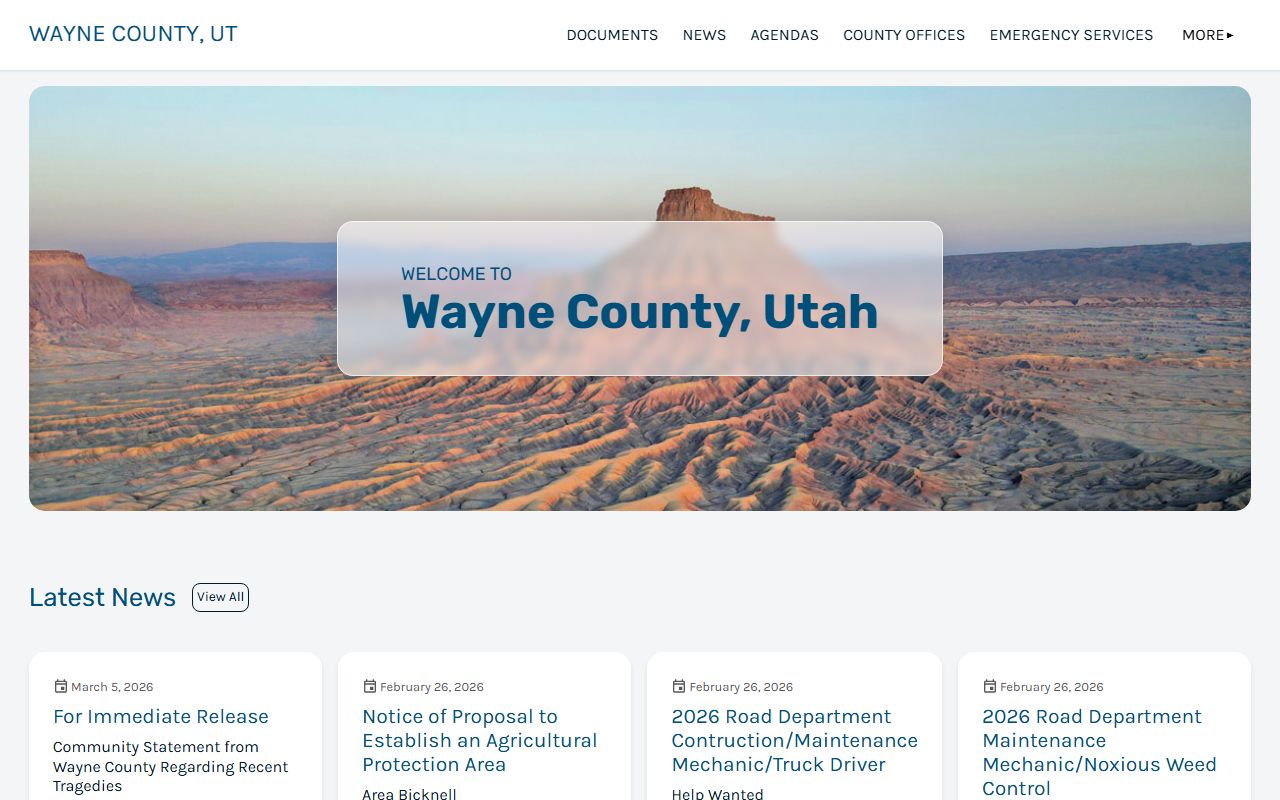
The county home page image is the only successful local visual for Wayne County Genealogy, so it serves as the practical anchor for the county's clerk and recorder research path.
Wayne County Genealogy Records And Loa Context
Wayne County Genealogy works best when you keep the county's 1892 creation date in mind. Because the county was carved from Piute County, any family record that predates that date belongs in the parent county or in broader Utah sources before Wayne County existed. Once the county was organized, Loa became the center of the record trail, and the clerk and recorder became the main places to locate marriage, probate, land, and court evidence. That gives Wayne County a clear and manageable framework for tracing families who lived in the county's small towns, ranch districts, and rural settlement areas.
The record ranges are straightforward. Marriage records begin in 1892. Birth and death registers cover 1898 to 1905. Probate, court, and land records begin in 1892. Those dates tell you which office is most likely to hold the clue you need. A probate file can identify heirs. A court record can explain an estate or settlement matter. A land file can show whether a family stayed in Loa, moved to another tract, or passed property to the next generation. Because the county is relatively late in Utah county history, the same household may appear in a concise but very useful record trail from the start.
The county name also matters because it reflects a specific local family connection rather than a large geographic feature. That helps with interpretation, because Wayne County Genealogy often needs careful attention to family names, settlement timing, and the sequence of record creation. Once the place name and the record type are read together, the county becomes easier to use for a line that may have shifted from Piute County into Wayne County in the 1890s.
Wayne County Genealogy In State Sources
Because Wayne County has only one successful local image in the manifest, the county benefits from state-level context to fill out the research path. Utah State Archives is useful when the county record needs broader government context or preservation history. In a county created in the 1890s, the archives can help explain how the record series was preserved and where related material may have been indexed.
Lead-in source: Utah State Archives.
The archives image is a useful anchor for Wayne County Genealogy because the county's late creation date means archival context often matters as much as the record date itself.
Utah State History helps place Wayne County inside the broader settlement story of south-central Utah. That matters because the county's late formation from Piute County and its Loa center both shaped the local record trail. If a family appears in land or probate before it appears in a marriage index, the history context can help explain the sequence.
Lead-in source: Utah State History.

The history image fits Wayne County Genealogy because the county's identity is tied to a specific late county formation and to the Loa-centered settlement pattern.
Utah Digital Newspapers is another valuable source for Wayne County Genealogy. Obituaries, marriage notices, local reports, and short community items can identify spouses, children, and residence clues that are easy to miss in the county books. In a smaller county like Wayne, newspaper evidence often helps distinguish one family branch from another when the surname repeats across the county's rural communities.
Lead-in source: Utah Digital Newspapers.

The newspaper image is useful here because Wayne County Genealogy often needs local notice evidence to connect a county record to the next generation.
Utah Vital Records and the CDC Utah vital records page explain the later certificate system, while Utah Code Title 26 shows why the county and state systems divide the work the way they do. Wayne County Genealogy benefits from that distinction because the county's early register window does not cover every event and later births or deaths often belong in the state system instead of the courthouse.
Lead-in source: Utah Vital Records.

The vital records image is a practical cue because Wayne County Genealogy often moves from county registers into later state certificates as families advance into the twentieth century.
Wayne County Genealogy Research Strategy
The best Wayne County Genealogy workflow starts with the event date and the right office. Use the clerk for marriages, probate, court, and early vital records. Use the recorder for land and property. If the event falls within the county's local register window, the clerk is the right first stop. If it is later, Utah Vital Records or the county health route should be the next move. That sequence keeps the search tied to the proper period instead of turning it into a broad surname hunt.
It also helps to keep Loa in view. Because the county seat has been central since 1892, many records converge there even when the family lived elsewhere in the county. A property transfer can show movement across the county. A probate packet can identify heirs. A newspaper item can confirm a household name or a marriage. When those pieces line up, Wayne County Genealogy becomes much easier to document because the county's record trail is concise but still layered.
For families that moved out of Piute County into Wayne County, the boundary date is the key to accuracy. If a record predates the county's creation, the earlier county remains the right place to search first. Once that boundary is respected, Wayne County Genealogy becomes a dependable source for tracing southern Utah families through marriage, land, probate, and later state records.